Menopause - A Chinese Medicine Perspective


Menopause - a word synonymous with for those reaching fifty. You may have heard awful stories or have witness your aunties or mothers going through this dreadful phase of womanhood.  Symptoms of menopause does not occur straightaway but rather it gradually and subtly increases over time.  There may be occasional hot flushes and night sweats, headaches or migraines that you never used to have, irregular cycles with heavy to light flow, harder to shift the weight, insomnia etc.  These minor changes are often an indication that the body and hormones are beginning to change and shift.  During this phase, it is classified as peri-menopause where there are still regular or occasional menstrual bleed with the added symptoms.  Menopause is defined as the cessation of menstrual bleed for over a year. However, symptoms of menopause can persist for up to three to five years or more.

Symptoms

Hot flushes, vaginal dryness, night and/or day time sweats, insomnia, migraines, anxiety, hair loss, weight gain, mental fog, fatigue and etc

Chinese medicine perspective/cause

Menopause is a natural progression of womanhood.  As we age, Kidney Jing which constitute both Yin and Yang decreases.  Kidney Jing is our source of vitality/reserve.  Depending on your lifestyle, diet, constitution and emotional factors, the reserves of Kidney Jing is there to assist you throughout your journey in life.  If you are burning both ends of the candle with high stress, have poor diet and lifestyle, not looking after yourself after multiple childbirths, etc, your reserve can be used up to help sustain the body to survive.  When you tap into this reserve at an early stage of your life, this can cause an imbalance and disharmony oh both Yin and Yang of Organs that supports the smooth transition into menopause. Can Chinese medicine and acupuncture reverse this process?  The answer is no.  What we can do is to preserve whatever reserve (Kidney Jing) you have left and manage the symptoms via acupuncture and herbal medicine.  This also includes changing lifestyle, diet and addressing emotional factors.

Treatments

Treatment consist of acupuncture and herbal medicine.  The acupuncture protocol and herbal strategy depends on the signs and symptoms of your menopause.  Treatment may take up to at a year or two to manage and reduce the symptoms.  In my clinical experience, the more severe the symptoms, the longer the treatment will take.  I often find patients that get successful results (3-6 months of regular acupuncture and herbal medicine) will stop coming in for treatments to later find that the symptoms resurface again.  My advice is to stick with the course of treatment as menopause may take three to five years or more before it finally settles down and the balance and harmony within the body is achieved.

Prevention

According to Chinese medicine, our lifestyles, diet and emotions can determine the severity of menopause symptoms.  By adopting some changes now, it can minimise symptoms and the transition into menopause smoothly.  Changes that we can do are:

Stress – avoid over working and spending long hours without any breaks or adequate rest in between.  By overworking this can consume your vitality and consume your reserve (Kidney Jing) leaving you feeling burned out way before you hit menopause.  This will have a huge impact on how well your body can handle and manage this transition.

Diet – adopt a moderate diet incorporating adequate protein, vegetables and grains.  Do enjoy a little naughty things in life. Savour each treats such as pastries, cakes, crisps in moderation.  I always advocate a moderate diet that encompasses different varieties of foods, including naughty food. Being too strict with your diet can also cause disharmony to the body.

Smoking – this should be avoided as it consumes and burns the vitality (Jing).  According to Cu Ci Shan (Qing dynasty): “Tobacco is pungent and drying, it burns Jing (Kidneys) and the Fluids, damages the throat, the Stomach and the Lungs… it enters the Heart orifice causing mental confusion as if one were drunk. It makes the tongue coating dark-yellow or black, food and drink have no taste, and the medical texts have no treatment for this.

Beverage – minimise or avoid black tea, coffee and alcohol.  These drinks are deemed Hot in nature.  By over consuming these beverages, it can add additional Heat into the body therefore exacerbating hot flushes and night sweats. Heat has the ability to dry fluids up. Fluids are considered Yin in nature which assist in nourishing our skin, lubricate the vaginal and supports the cooling function of the body.

Emotions – manage anxiety, fear and anger. These emotional factors that builds up over years can damage the vital organs that supports the smooth transition into menopause. These emotions can also consume reserve.

Menopause should not be something you should dread. It should be celebrated! By looking after your well-being and mental health at an early age, menopause can be empowering and to some extent liberating from what I have seen in my patients. Chinese medicine philosophy believe in preventative measures to avoid or minimise poor health outcomes. However, if you are in the midst of it all and made poor lifestyle choices, do not be dishearten. We can still work on rectifying and re-adjusting the body so that it becomes in harmony again. I encourage you to explore Chinese medicine to assist in managing your menopause symptoms by booking online for a consultation. I look forward in assisting your transition into menopause with ease.

Menopause

 
menopause
 

Menopause is a natural progression in womanhood when the reproductive system begins to declined and menstrual blood stops permanently for twelve months. This transition leading up to the last period (peri-menopause) and into menopause can last between two to five years or sometimes more. The median age of menopause in industrialised country is fifty-one years old, peri-menopause symptoms can occur between forty-eight to fifty-five years old. However, certain circumstances may bring on early symptoms of peri-menopause for example:

  • women that never had children

  • smoking (studies have shown that smoking can cause early onset of menopause up to two years earlier than women that do not smoke)

  • chemotherapy or surgery that had removed both ovaries

  • other health problems (Dutta, C. & Joffe, H., 2019, Office of Women’s Health, USA)

Western medicine in Australia treat menopause using Hormone Replacement Therapy (HRT). It is an effective medication that can ease the transition into menopause however, there are some side effects such as the risk of blood clots, stroke and breast cancer (2019, Australasian Menopause Society).

From Chinese medicine perspective, women’s health has an important part in Chinese medicine for 700 years assisting women throughout their phases. There are seven phases of a women’s life, each within a seven year cycle (refer to info-graph below). Peri-menopause and menopause falls in the sixth and seventh phases of a women’s cycle. As written in the Classic of Suwen, age between 42 to 49, “… the face scorched all over” suggest the beginning of peri-menopause symptom of hot flushes. At the age of 49 and beyond, the extraordinary vessels that supports menstruation (Ren Mai and Chong Mai) is emptied and weaken and, Tian Gui (menstruation) is exhausted, the onset of menopause begins.

 
menopause
 

Main symptoms are:

  • Vaginal dryness

  • Hot flushes/flashes

However, there may be accompanying symptoms such as:

  • Sweating/Night sweating

  • Headache

  • Lethargy

  • Tiredness

  • Irritability/Emotional changes

  • Anxiety

  • Nervousness

  • Depression

  • Insomnia

  • Poor concentration

  • Weight gain

  • Diminished sexual desire, low libido

During peri-menopause phase, there may be symptoms of irregular periods with shorter or longer cycles, lighter or heavier flow and symptoms listed above due to fluctuation of estrogen and progesterone and to some certain extend, testosterone levels. These fluctuations from a Chinese medicine perspective is due to the imbalance of Yin and Yang and the decline in Kidney Jing. Can Chinese medicine and acupuncture ease the transition into menopause? Absolutely! To understand how we go about managing and assisting patient with peri-menopause and menopause, head to the next article ‘Menopause from a Chinese medicine perspective.’

Gula Melaka Poached Pear

 
Gula Melaka Poached Pear Mgtestkitchen
 

There’s nothing quite like comfort food as the colder months approach. Minimal effort and versatile, poached pears are great as a light and elegant dessert, or delicious with quinoa porridge to start the day.

To give the poached pears a deeper depth of flavour, try using Gula Melaka, a sweetener derived from coconut palm instead of caster sugar. It’s readily available in most Asian grocers or large supermarkets in solid or liquid form. Everyone’s palate is different, so have a play with the amount of sweetener until you find the perfect measure for you.

Ingredients

4 medium firm pears, peeled (leave stalks on)

Gula Melaka to taste (shaved from a block or liquid. Replace with coconut sugar if you’re unable to find Gula Melaka)

Star anise (1 large one, or 2 small ones)

Cinnamon stick (whole)

4-6 Cardamom pods

1 inch of fresh ginger (sliced)

Instructions

Place all ingredients in a pot and with water, ensuring that the pears are submerged entirely. Taste the poaching liquid and adjust with more Gula Melaka if required.

Bring the poaching liquid to a boil, then reduce to a gentle simmer (the bubbles should just be popping gently on the surface of the liquid). Poach for 1.5-2 hours, depending on the size of your pears. Pears are cooked once a knife spears through the thickest part easily.

Remove from poaching liquid and continue to reduce the liquid until it’s syrupy. Store the pears in the liquid until you’re ready to use them (they’ll store for up to a week, if you can stop yourself from finishing it in one sitting!).

Endometriosis - A Chinese Medicine Perspective

 
endometriosis chinese medicine acupuncture
 

Endometriosis is a condition in which the endometrium lining (interior lining of the uterus) is found outside of the uterine cavity causing inflammation, adhesion and cysts. It is estimated that endometriosis affects 1 in 10 women, which is 200 million women worldwide (1). It is one of the leading causes of school absences in teenager and per-teen girls, and days off work for adults. Endometriosis lesions can be found anywhere and is not limited to only outside the uterine cavity. Lesions can be found in ovaries, fallopian tubes, pelvic side walls (peritoneum), uterosacral ligaments, cul-de-sac, Pouch of Douglas, rectal-vaginal septum, bladder, bowel, intestines, colon and rectum (2).

The most common symptom associated with endometriosis is pain. For many women, having endometriosis is a lifetime challenge in managing symptoms which include but not limited to severe stabbing to dull pain before, during or throughout the menstrual cycle. Endometriosis can disrupt anatomic, hormonal and immunologic environment causing a variety of symptoms such as pelvic pain, dysmenorrhoea (painful period), painful intercourse, difficulty in bowel movements, painful urination, abdominal masses, ovarian cysts and infertility (3 & 4). Treatment for endometriosis are hormone therapy (Gonadotropin-releasing hormone medicine, oral contraceptive pill, Progesterone and progestin pill), pain medication (nonsteroidal anti-inflammatory drugs NSAIDS) and surgery (laparoscopy) (5).

From Chinese medicine perspective, endometriosis falls under the category of Tong Jing (painful period) and Zheng Jia (abdominal masses). As there were no lab tests or ultrasound available back then, physicians of Chinese medicine relied on signs and symptoms, and abbominal palpation to aid in figuring out patterns of disharmony. In my clinic, I have seen a fair few of endometriosis patients. Majority were diagnosed with endometriosis and to some extend, patients that came in for severe period pain managements were told to have have test done by their doctor on the suspicion of endometriosis. Each patients are often presented with different qualities, presentations and location of pain together with other symptoms such as abdominal pain, constipation, bloating, anxiety, depression etc. There are six patterns associated with endometriosis and each patterns are managed differently through acupuncture and herbal medicine. The six patterns are (3):

  • Liver Blood Stasis - intense stabbing pain before or during period aggravated by pressure, hard and immovable abdominal masses on palpation, pain is generally relieved after passing clots. Menstrual blood is often dark brown with large clots and is often accompanied with mental restlessness

  • Damp-Heat - hypo-gastric pain before the period, sometimes during mid-cycle. There is a burning sensation extending to the sacrum. Menstrual blood is bright red with small or stringy clots with thick and sticky consistency

  • Blood Stasis due to Heat - intense, stabbing and possibly burning pain that may be constant or intermittent throughout the cycle. Pain is relieved by passing out clots. Menstrual cycle may be short with heavy bleeding of bright red blood and large clots. Accompanied symptoms are anger, headaches, insomnia and restlessness

  • Blood Stasis due to Cold - dull aching pain throughout the cycle and during period. Menstrual blood is dark red with clots, pain is aggravated with pressure and touch but is relieved with application of heat source such as hot water bottle or wheat bags. Accompanied symptoms are cold limbs, sensitivity and aversion to cold

  • Blood Stasis and Phlegm - chronic pain throughout the menstrual cycle becoming excruciating painful before and during the period. Menstrual bleed can be hesitant at the start becoming very heavy, sticky and clotted. There may be sticky and heavy vaginal discharge, poor digestion and tiredness

  • Kidney Yang Deficiency - painful period with abdominal pain relieved with pressure and heat. Menstrual blood is pale, watery and light. Accompanied symptoms are water retention and bloating before period, dizziness, frequent urination, low libido, feeling cold, lower back pain.

It is believed that 30-50% of women suffering from endometriosis are infertile. There are no evidences that suggest that a combination of medical-surgical treatments significantly enhances fertility (6). Current research on the efficacy of Chinese medicine and acupuncture of infertility due to endometriosis is sparse however, a questionnaire conducted during the World Congress of Integrative of Medicine and Health in 2017 with 133 patients, result had shown that 86.2% of endometriosis sufferers had used complementary procedures, of which 46.9% for the treatment of infertility. The most frequently used complementary therapy was Traditional Chinese Medicine (51.1%) and acupuncture (60.3%). It is suggested that further research and and randomized controlled studies to further investigate the effectiveness of complementary procedures are highly warranted (7).

Chinese medicine and acupuncture is very effective in managing endometriosis if you would like avoid hormone therapy or NSAIDS. It is also very effective in keeping the re-occurrence of endometriosis after a laparoscopy (there is no cure for endometriosis). If you would like to understand how Chinese medicine and acupuncture can help manage your endometriosis symptoms or if you are looking at fertility issues with regards to endometriosis, I would be happy to have a chat with you in my clinic. Simply book online for a FREE 15 minutes Complimentary Consult or book in for a consult and treatment today.

References:

  1. About Endometriosis. www.endometriosis.org

  2. What is Endometriosis? www.endomarch.org

  3. Wu, Y. et al. (2019). Female Infertility & Reproductive Gynaecology: A Comprehensive Clinical Manual of Integrated Chinese Medicine and Biomedicine. The Journal of Chinese Medicine Ltd. UK

  4. Vercellini, P. et al. (2014). Endometriosis: Pathogenesis and Treatment. Abstract from PMID:24366116. www.ncbi.nlm.nih.gov/pubmed

  5. What are the treatments for endometriosis? www.nichd.nih.gov/health

  6. Bulletti, C. et. al. (2010). Endometriosis and Infertility. PMID: 20574791. www.ncbi.nlm.nih.gov/pubmed

  7. Grzanna, N et. al (2017). P62 Relevance and Acceptance of Naturopathic and Complementary Medicine in Women Suffering From Endometriosis

    World Congress of Integrative Medicine and Health: Part Two, Berlin, Germany. PMCID: PMC5498867. www.ncbi.nlm.nih.gov/pubmed

Spring Series: Growth and Expansion

 
springgreen.jpg
 

Spring is in the air! Daylight feels longer with slightly warmer temperature during the day, flowers are blossoming, and plants that had laid dormant under the soil are sprouting upwards . We are slowly rising from deep hibernation that has rejuvenated and renewed our energy which we begin to gently release it outwardly. The heavy Yin energy (cold, slow and deep) begins to slowly shift and transform into a light Yang energy (warm, growth and light).

In Chinese medicine, spring is the governed by the Liver, belongs to the Wood element, and the flavour that supports the Liver is Sour. Its colour is Green, the climatic element is Wind, and sense organ is the eyes. The energetic organ of the Liver is in charged of the smooth flow of Qi (energy), stores Blood for nourishing Organs, and controls the tendons and sinews in the body.

In an ideal situation, we would have rested and built our energy through winter months to transition into spring. However, life, emotions, illness and work often challenge our intentions, making us feel that there is not much reserve to spring into the coming season. As much as there is growth and expansion in spring, there can also be volatility and sudden movements in the transformation, especially when we are depleted and deficient in Qi. For example, when the Liver is not nourished and anchored, external Wind can stir emotions such as anger, irritability and annoyance outwardly (Liver Qi Stagnation). Internal Wind generated due emotional outburst sending Heat to rise up to the head causing headaches, migraines or sudden outbreak of acne. In addition, we may feel a sense of overall tightness, sluggishness and stagnant energy in the body due to sinews and tendons that are either not nourished by Liver Blood or caused by Liver Qi Stagnation. Here are a few handy tips to help the Liver and body to move forward into spring:

 
  • Squeeze of lemon juice or apple cider vinegar with warm water in the morning before breakfast to get that Liver Qi moving and to kick start the day

  • Move, move, move! After long months of winter hibernation and lack of outdoor activities, spring is the best time to go out for walks or to get back into yoga, Pilates or gym. When we move, we stimulate Qi to flow to the body and sending endorphins to the brain therefore, making us feel less lethargic, moody and snappy

  • Switch from heavy winter diet such as curries and lamb stews to lighter meals such as sauteed or quick stir fry fresh green vegetables

  • Use dry brushing to stimulate Qi and Blood flow under the skin. Starting from the leg, using long gentle strokes, move the brush upwards towards the Heart. This helps to exfoliate the skin, support lymphatic drainage and reduces the appearance of cellulite

  • For those that have a roller jade or facial gua sha tool handy, you can use it to help stimulate Qi flow to the face, and lymphatic drainage. This is especially useful for hay fever sufferers or problems with the sinuses


I hope this short list can assist you in transitioning into spring a little easier. However, if you need extra help, we are here to assist you. Simply BOOK ONLINE for either a FREE 15 minutes consult to discuss your concerns or a treatment.

Eczema - An approach from Chinese Medicine

 
eczema_itchyskin_eastential
 

Eczema, also known a dermatitis is a debilitating skin condition that affects 1 in 3 Australasian (Eczema Association of Australia). Eczema can occur in any stages of life starting as young as early childhood from the ages of 2 to 6 months and in adulthood. There are many types of eczema ranging from atopic eczema, to phomphylox eczema, seborrheic eczema and so forth.

Eczema can present in many different forms and symptoms. There may be -

  • Moderate to severe itchy skin

  • Red rash occupied by either dry, patchy, weepy, thicken, cracked skin, bleeding and/or scales

  • Papules, vesicles, crusting

  • Areas that are commonly found are on the flexors of the knees and arms however, it can occur on the hands, feet neck, face and any parts of the body

Accompanying symptoms are -

  • Fatigue

  • Stress, irritability and mood swings

  • Depression and Anxiety

  • Thirst

  • Poor digestive and bowel function

  • Insomnia

  • Poor concentration and focus

Chinese medicine perspective -

  • What cause eczema?

    In Chinese medicine, any skin condition is an indication of an imbalance of yin and yang in the body. The principle of yin and yang is to create an equilibrium between these two polar opposites within the body to function harmoniously. In the case of eczema, there is no one definitive answer to what cause this debilitating skin condition, rather the answer lies within the presentation of the individual itself. The cause of eczema from Chinese medicine perspective are Wind Heat, Damp Heat, Toxic Heat and/or Blood deficiency causing Dryness and Wind.

  • How do we diagnose eczema?

    The body, especially the skin is an amazing diagnostic tool. In Chinese medicine, there are four method of diagnosis - observing, questioning, listening and palpating. We observe for signs and symptoms of the skin condition and ask detail questions into the body’s health. This will give us clues to what is out of balance in the body through observation and gathering of information. Therefore, helping us form a holistic diagnosis of the root cause of eczema. For example, itchy skin from Chinese medicine perspective can be caused by Heat, Wind and/or Dryness as a result of an internal imbalance of the body. In addition, we look at what levels the eczema is presented. For example, if the eczema is presented with mild itching with pinkish tones, it would be at a superficial level (Qi level). If the eczema is red, angry, weeping and intense itching with bleeding, it would be at the deeper level (Blood level). We also look at the tongue and perform pulse analysis as part of our diagnostic tool to determine the condition of the body. Thus making it a holistic treatment.

  • How do we approach eczema?

    There is no one-size-fits-all approach from Chinese medicine perspective. Each person presented with eczema will most likely be looked at differently in terms of acupuncture and herbal medicine. In eczema, herbal medicine is often prescribed as the symptoms are a result of an internal imbalance. Herbal medicine targets the root cause of the imbalance whilst resolving symptoms derived from it. External application such as ointment or salve made from Chinese herbs may be recommended to aid the skin condition symptomatically.

  • When will I see some results?

    Generally, it will take 3-6 months. The duration often depends on the severity of the eczema. However, the skin will see some form of improvements such as reduction of flare ups, itchiness and redness within 3 months of consistent acupuncture and herbal medicine. In addition, accompanying symptoms listed above will greatly improved as well.

  • What ingredients do you use in the herbal medicine?

    Majority of the Chinese herbs we use are derived from roots, twigs, leafs and flowers, and occasionally we may use the shells of cicadas which are collected after the cicadas had shed them naturally (the insect is not used).  The shells of the cicadas have a effective anti-itch property. However, if you are a vegetarian or vegan, we have many other anti-itch herbs that are just as effective.

  • How does Chinese medicine help with getting off topical corticosteriods?

    We would go through it very gently and slowly. Firstly, the potency of topical corticosteriods will be reduced while taking Chinese herbal medicine and acupuncture to help manage the symptoms. Over time, the use of topical corticosteriods will be reduced and, be completely eliminated, then to be replaced with Chinese medicine and acupuncture. Going off topical corticosteriods abruptly will cause an intense flare up therefore, to manage these flare ups a cautious and sensitive approach is adopted.

  • What can you do to help yourself?

    Majority of eczema sufferers find that by avoiding certain types of food and using a natural skin care product can help reduce the severity of their skin condition.

    Foods to consider avoiding are gluten, sugar, dairy, alcohol, processed food, deep fried and greasy food. Warming spices such as turmeric, ginger, cloves, cinnamon, cardamon should be used minimally to avoid adding Heat to the body. Part of the approach and strategy to eczema in Chinese medicine is to clear Heat from the body. Redness and inflammation are seen as Heat. Heat can dry out fluids that moisturise the skin, therefore causing dry, cracked and itchy skin.

    Natural skin care are recommended to keep the skin moist. As there are many natural skin products available in the market today, it is important to read the ingredients used in the product. Ingredients such as shea butter, jojoba oils are good at moisturising dry skin. Avoid any synthetic scent which can cause irritation to the skin, this include perfume and cologne. It is best to go scent free if possible however, some essential oils derived from plants such as chamomile and lavender can be added to sooth the skin, which also has a calming affect on the mind.

  • Where do we from here?

    Chinese medicine approach and strategy to addressing eczema is to look at each presenting symptoms individually. There is no “one-size-fits-all” approach. If you would like to find out more about how Chinese medicine and Acupuncture can help with your eczema, book in for an initial consultation. We look forward to hearing from you.

Spiced Lamb with Longan and Goji Pesto and Kaffir Lime and Aubergine Labneh

 
spiced lamb01.png
 

This dish marries Middle Eastern and Asian flavours to create different layers that pop on the palate. It sounds unusual, but they do work together.

The kaffir lime and aubergine labneh, and longan and goji pesto are also great as condiments on their own which makes them so versatile but they really do take the lamb to another level when served together. The labneh is best made a day ahead so that there is time for the flavours to develop. 

We'd love to hear from you so don't forget to tell us what you think about this recipe in the comments box below!

Serves 2

Kaffir lime and aubergine labneh

30x30cm cheese cloth (also know as muslin cloth)

150gm natural yoghurt 

2 pinches of salt 

1 medium aubergine

1gm kaffir lime leaf

2 tbsp tahini

1 tbsp sesame oil

1 tbsp olive oil

1/2 lime, juice

1 tsp garlic powder

1.5 tsp fish sauce

large bunch coriander 

1.5 tbsp coconut sugar (or brown sugar)

pepper to taste


Spiced lamb

1tsp sumac

2 tsp cumin seeds, ground 

1 tsp fennel seeds, ground

1 tsp green peppercorn, ground

1 tbsp sesame oil

1 tbsp sunflower oil

1 tsp pomegranate molasses

1 tbsp mirin

1 tsp light soy sauce

400gm lamb loin (or any kind of cut that's suitable for grilling)


Longan and goji pesto

40gm fresh mint leaves

40gm longan

small clove of garlic

15gm goji berries

400gm cashew and macadamia mix, roasted (plain cashews also works well)  

3 tsp fish sauce

1/4 lime, juice

3 tbsp mild vegetable oil

pepper to taste


To plate

Dried tangerine peel powder (if available, but not mandatory)

Finger lime or lime zest


Method:

  1. Line the middle of a bowl with the cheese cloth to make the labneh. Stir the yoghurt with two pinches of salt in a separate bowl and pour into the middle of the cheese cloth. Grab two opposing sides of the muslin cloth and tie a knot. Repeat with the remaining two sides until you get a ball of yoghurt. Hang the ball of yoghurt over a vessel in the fridge to drain for 12 - 24 hours; ensuring that the bottom of the cloth does not touch the drained liquid. You should have a thick curd at the end of this process. Keep in the curd in the fridge until required.

  2. Pre-heat the oven to 220 degrees celcius. Pierce a few holes in the aubergine with a knife and wrap with tin foil. Place the aubergine on a baking tray and cook the aubergine for 40 - 45 minutes, or until the inside is soft (the skin will be hard, but the aubergine should compress easily when pushed). Remove from the oven and set aside to cool.

  3. Remove the central stalk from the kaffir lime leaves with a sharp knife or scissors and place the leaves in a mortar. Crush with the pestle until you get a fine texture, almost like powder if you're using dried leaves; or a fine paste if you're using fresh leaves. You may also use a coffee or spice grinder to do this. Transfer to a food processor. 

  4. Scoop the flesh from the cooled aubergine in to the food processor and discard the skin. Add the labneh, crushed kaffir lime leaves and the rest of the ingredients to the food processor and blitz until you get a creamy consistency. Taste and adjust the seasoning if required.  The labneh should be a mix of savoury, a little tangy and sweet, with the freshness of the kaffir lime leaves coming through. Store in an airtight container in the fridge until required. The labneh can be made a day ahead and should keep for 2-3 days. Remove from the fridge 30 minutes before you're ready to plate.

  5. Next, prepare the marinade for the spiced lamb. Place all the dry spices and wet ingredients in a bowl and mix well. Place the lamb in a non-reactive vessel or plastic container and spread the marinade over the lamb. Massage the meat well and marinade in the fridge for at least an hour. Remove from the fridge an hour before you're ready to cook so that the meat has time to get down to room temperature.

  6. While the lamb is marinating, make the pesto. Rinse the mint leaves and set aside to dry. Chop the dried longan in to small pieces and transfer in to the mortar. Skin the clove of garlic and add to the chopped longan pieces. Crush the garlic and longan well, then add the goji berries and crush well. Add the mint leaves to the rest of the ingredients in the mortar and crush until you get a well mixed paste. Add the roasted cashews and macadamias and crush until you have a mix of fine and medium textures.

  7. Add the fish sauce, lime juice and vegetable oil, and mix well. Add a few pinches of pepper. Taste and adjust the seasoning if required. You should taste the sweetness of the longan and goji berries initially, then have the saltiness from the fish sauce and a hint of sourness from the lime hit your palate at the end. Set aside until required. This pesto can be made 1-2 days ahead.

  8. Heat a griddle or pan well and cook the lamb on a medium - high heat for about 4 - 6 mins on one side, then flip and continue cook for another 4 minutes (the cooking time will differ, depending on the thickness of the meat. My preference is to serve the lamb medium). Transfer the cooked lamb to a plate and rest. 

  9. To plate, spoon the aubergine and kaffir lime leaf labneh onto a plate. Slice the rested lamb on a diagonal and arrange the slices on top of the labneh. Sprinkle some dried tangerine powder and lime zest (or squeeze the finger lime if using) over the lamb.  Spoon some pesto to the side of the lamb and serve immediately.

Rose and Coconut Panna Cotta with Longan and Chrysanthemum Granita and Brown Butter Cashew Praline

 
rose pannacotta.png
 

Everyone loves a panna cotta with the perfect wobble and this rose and coconut panna cotta certainly doesn't disappoint. The praline adds texture, while the granita lightens the creaminess of the panna cotta. Heaven. 

Sheet gelatine is often confusing as they come in different strengths (also known as bloom) and sheet weight (titanium leaves measure 5gm each, gold 2gm each and bronze 1.5gm each).  Unfortunately, there are very little guidelines on how to interpret both.

Gelatine sets on a scale between 0.6% (still runny) – 1.7% (firm) and after several rounds of testing, I've found that panna cotta is best at ~1.3%. To find out how much gelatine to use, simply mutiply the weight of the liquid with desired percentage, e.g. 400gm panna cotta mix  x 0.013 = 5gm of gelatine. I've used titanium grade gelatine in this recipe, but you can easily substitute it with bronze or gold. Just ensure that you use the equivalent in weight e.g. 2.5 sheets of gold in lieu of 1 sheet of titanium. 

If you're time poor, make the components of this dessert a day or two in advance so that all that's left to be done on the day is to plate. We'd love to hear from you so don't forget to tell us what you think about this recipe in the comments box below!

Serves 2

Longan and chrysanthemum granita:

500ml hot water 

20gm dried longan

10gm dried chrysanthemum flowers

100gm coconut sugar (or muscovado sugar)


Rose and coconut panna cotta:

125ml coconut cream

125ml thickened cream

60gm caster sugar

5 gm dried rose buds

3/4 sheet of titanium gelatine leaf  

2.5 tbsp rose water

Brown butter cashew and citrus praline:

30 gm cashews

2 tbsp butter

4 tbsp coconut sugar (or muscovado sugar)

1 - 2 tbsp dried citrus powder

1 - 2 tbsp ground coriander

To serve:

dried rose petals

candied citrus peel


Method:

  1. 24 hours before serving, mix the dried longan, chrysanthemum flowers and muscovado sugar with the hot water and stir until the sugar has dissolved. Let the fruit and flowers steep in the warm syrup for a minimum of an hour (a longer steep will impart more flavour). Once steeped, pour the liquid through a sieve and into an airtight container. Place the container in the freezer to set.

  2. Make the panna cotta while the granita is setting. Soak the gelatine leaf in cold water and set aside.

  3. Mix the coconut cream, thickened cream, caster sugar and rose buds in a small pan over a medium heat. Bring the mix to a gentle boil, stirring occasionally to help dissolve the sugar. Turn off the heat and let the rose buds steep for five minutes. 

  4. Remove the gelatine from the water and squeeze out any excess liquid. Add the gelatine to the panna cotta mixture and stir until fully dissolved.  Next, add the rose water and mix well. Strain the mix through a fine sieve in to moulds or your desired vessels and let the mix cool before placing vessels in the fridge to set for a minimum of 5 hours. 

  5. Next, prepare the praline. Crush the cashews coarsely in a mortar and pestle or simply chop them with a knife. Set aside. In a non-stick pan, gently heat the butter until it starts to turn brown. You should see the milk solids start to appear at the base of the pan. Remove from the heat and drain the brown butter into a bowl with a sieve. Discard the milk solids. Return the brown butter to the pan and add the sugar. Heat the brown butter and sugar over a medium heat, swirling the pan occasionally to help the sugar dissolve. The liquid should be a dark brown colour when it's ready. The butter may split from the sugar. Stir well to emulsify the butter with the melted sugar.

  6. Remove from the heat and carefully mix in the coarsely chopped cashew nuts, ensuring that the nuts are well coated (be careful as the liquid will be very hot). Tip the coated nuts on to a baking sheet lined with baking paper and let the mix cool. Once cooled entirely, break into small pieces. Crush the pieces into coarse grains with a mortar and pestle. Add 1 tbsp of the dried citrus powder and ground coriander and mix well. Taste and add the remaining to your preference. Transfer to an airtight container until you're ready to use. This should keep for a few weeks if stored in a cool, dry place. 

  7. To plate, remove the granita mix from the freezer 5 - 10 minutes before you're ready to serve. Loosen the panna cotta by placing the moulds in a warm bain marie (water bath) for 30 seconds and carefully tip on to plates. Scrape the surface of the granita mix with a fork until a pile of ice crystals form. Spoon some granita around the the sides of the panna cotta, and some cashew citrus praline on top of the panna cotta. Decorate with a few dried rose petals and candied citrus peel on top of the praline and serve immediately.

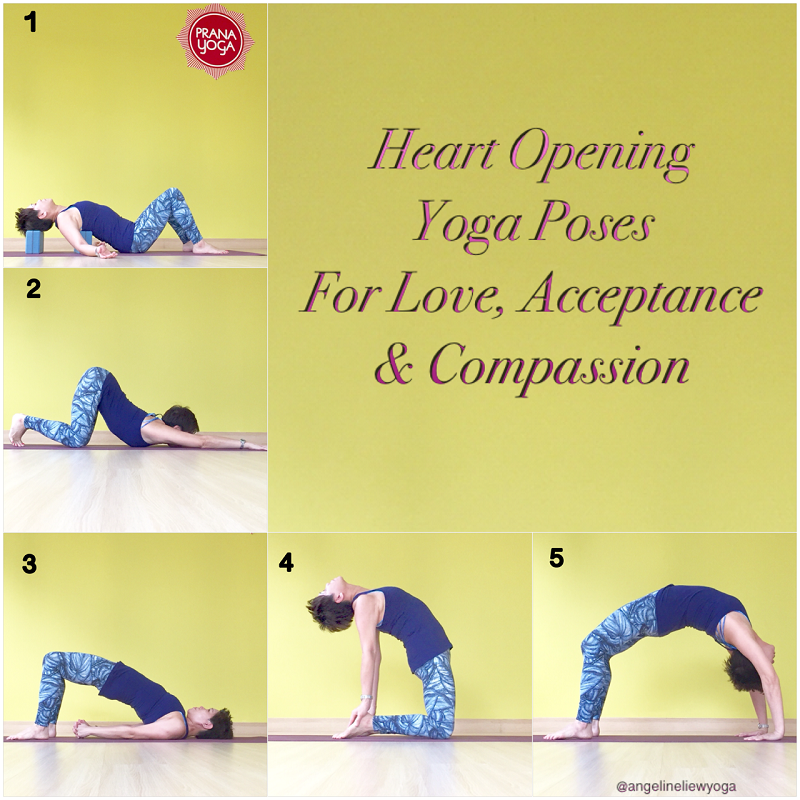
Heart Opening Poses For Cultivating Love, Acceptance & Compassion

 
PRANAYOGA.png
 

We are constantly reminded of love, especially in the month of February, thanks to St Valentine’s Day. In the practice of yoga, the centre of the chest is represented by the Heart Chakra (or ‘Anahata’, in Sanskrit). Chakras mean “wheel”, and being the fourth of seven Chakras that sit along the energetic pathway of the spinal column (Sushumna), Anahata is represented by loving vibrations, kindness, self acceptance, empathy and compassion, when energy is flowing freely.

Backbending asanas, be it restorative or dynamic, are often called “Heart Opening” Poses as they create a sense of liberation…physically, mentally and emotionally. Approach them with an open mind, and witness the ebb and flow of physical sensations and emotions that arise. Practise safely, and warm up well with a few rounds of Surya Namaskar (Sun Salutations) and standing asanas. Use props where necessary, and always consult a yoga teacher if you are new to the practice, have a medical condition or are pregnant.

START by rolling out your yoga mat, sit in a comfortable position and be still for a moment. Witness your breathing, and let your focus drop beneath the neurotic chatter of the busy mind, and into the cave of your heart. Set the intention for your practice (for example), “By accepting and loving myself, I am compassionate to others”.

  1. Restorative Chest Opener (with blocks) : place one block beneath the shoulder blades and one to support the head. This restorative pose gives a lovely myofascial release of the thoracic area whilst keeping the neck free from strain. A great relief after a long busy day at the office or with the kids. Soften into the space, and release your weight onto the block. Stay for 12 long, deep breaths, or even a few minutes if you can spare the time.

  2. Anahatasana (Heart Chakra Pose or Puppy Pose) : From an all-fours position, place your chin on the mat and extend your arms forward. Sink your chest onto the mat whilst keeping the breath smooth. Option to place your forehead on the mat if this variation is too intense for your neck.

  3. Setu Bandhasana (Supported Bridge Pose) : Lie on your back, bend your knees, and place your feet hip width apart. On an inhale, lift your hips up, and interlace your fingers, stretching your knuckles towards your feet. Keep your thighs parallel, and feel like you are lifting up to bring the chest towards your chin. Stay for 12 deep breaths, and on an exhale, release your hands, and lower back down onto the mat.

  4. Ustrasana (Camel Pose) : Come to a kneeling position with your knees and feet hip width apart. On an inhale, lift the chest up, up and up whilst arching and lengthening the whole spine, and place your hands lightly onto your heels. Tailbone is slightly drawn towards the pubic bone, and only if you are comfortable, drop the head back. Stay for 12 even breaths and enjoy the expansiveness of the front of your body. Option to tuck the toes for a more accessible modification.

  5. Chakrasana (Wheel Pose) : From Setu Bandhasana, place your hands by your ears, with the fingers pointing towards your feet, and elbows parallel to one another. On an inhale, lift up into Chakrasana, with your arms straight. Keep your legs engaged by gently hugging your inner thighs to your midline. Breathe well and on an exhale, bend your arms and legs to lower back onto your mat. 

Come into Balasana (Child’s Pose) as a counter-pose, followed by Savasana for a few minutes.

End your practice with gratitude and love, to yourself and to others.

Namaste.


Angeline Liew is a Yoga Teacher-Trainer and Co-Founder of Prana Yoga KL. To connect with her for yoga tips and inspirations, follow her on Instagram @angelineliewyoga or practise with her at www.pranayogakl.com


The Heart of Summer

 
james-connolly-363041-unsplash.jpg
 

In Chinese medicine, the season of summer signifies expansion, growth, activity and creativity. It is ruled by the Fire element and governed by Heart.

Summer is considered the most Yang time of the year, meaning there is an increase in outdoor activities, our energy moves upward and outward and, the Spirit feels light and joyful. Summer days are about creating joy and laughter with family and friends, soaking in longer daylight to enjoy al fresco dinning or a nice walk in the park after work and, spending a relaxing weekend on the beach or exploring nature. On the contrary, summer can also cause damage and harm. Continuous days of high temperature and sweltering heat can cause heat-strokes and sleepless nights, taking a toll on the body and mind. And the potential of bush fires that threaten wildlife and people living in areas prone to it.

In Chinese medicine, a person’s constitution is governed by both Yin and Yang. Some will tend towards more one or the other or some will have a good balance of both. A person with a Cold constitution (constant cold hands and feet, takes a long time to warm up, dislikes winter), is more Yin in nature. They are the ones that look forward to summer and gravitate towards heat the most, which is Yang in nature. On the other end of the spectrum, a person with a Heat constitution (loves winter, feels the heat instantly, dislikes heat), is more Yang in nature and tends to struggle in summer. They will find the summer heat unpleasant, there will be lack of interest to participate in outdoor activities and have a preference to stay indoor to avoid the heat.

The Heart, the Organ that belongs to the summer season stores the Spirit (Shen). According to Chinese medicine, the Heart is responsible for ‘appropriate behaviour, timely interactions, being respectful, helpful and thoughtful’ (Kaptchuk, T., (2000). The Wed That Has No Weaver, p.88). As the Heart is ruled by the Fire element, it can be easily agitated by heat, generating Heart-Heat resulting in insomnia, anxiety, inappropriate or bizarre behaviour. Joy is the emotion of the Heart. Enjoying summer festivals with abundance of alcohol and food, laughter and gatherings can increase joy to the Heart. However, too much joy can also damage the Heart especially when we overdo it with without having sufficient rest and recovery in between activities. In Chinese medicine, we always advocate moderation and balance to generate a harmony between Yin and Yang, rest and activities and, excitement and calmness in the body and mind.

The warmer months provide us with produce that are vibrant in taste and colour and are cooling in temperature. Eating with the season is important as nature has a way of providing what is essential for the body to function during the season. Lighter meals are appropriate and suitable for the summer season and, prepared and cooked using simple and fresh produce. Food such as meat, eggs, and excesses of nuts, seeds and grains should be reduced in consumption to avoid sluggishness. Bitter, the flavour of summer is recommended to be consumed in small amount to cool the intensity of Fire/Heat in the body and, to nourish and settle the Heart (Spirit) during the warmer months.

Bitter foods:

Bitter - alfalfa, bitter melon, romaine lettuce, rye

Bitter & pungent - citrus peel, radish leaf, spring onion, turnip, white pepper

Bitter & sweet - amaranth, asparagus, celery, lettuce, papaya ,quinoa

Bitter & sour - vinegar

Summer nourishing foods includes:

Grains & seeds - amaranth, rice, quinoa, lotus seed, pearl barley

Beans - mung beans, bean sprouts

Vegetables - cucumber, asparagus, bamboo shoots, bok choy, broccoli, Chinese cabbage, corn, mushrooms, snow peas, spinach, summer squash, watercress, seaweed, romaine lettuce, celery, lettuce, bitter melon, scallion, radish leaf, wax gourd, lotus root

Fruit - apricot, cantaloupe, rock melon, watermelon, strawberries, nectarines, mango, peach, lemon, papaya, tomato

Protein - fish, prawns, crab, mussels, octopus, scallops, pork, chicken, tofu

Species - mint, coriander, dill, anise, basil

Salmon Ceviche Cups

 
salmon cerviche.jpeg
 

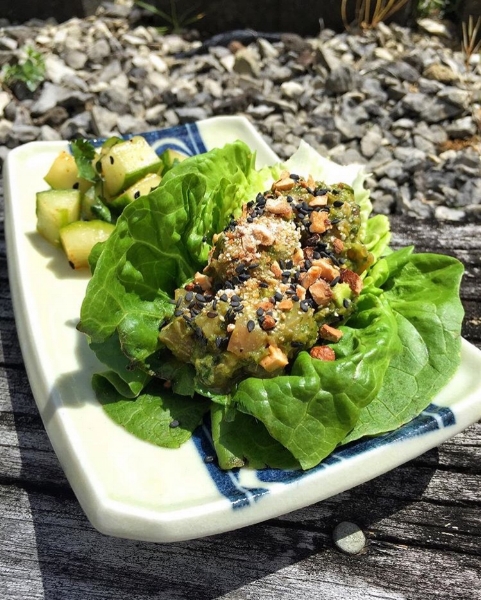
A simple Asian inspired salmon ceviche by MG Test Kitchen for those lazy summer days or for canapes/starters on Christmas day. Enjoy!

Serves 4-6 people as a starter.

Ceviche marinade

  • 2 stalks of lemongrass (only the lower bulbous half of the stalk), sliced and chopped finely

  • 2 kaffir lime leaves (available from Asian supermarkets. These leaves may also be frozen for longer storage)

  • Small to medium bag of coriander leaves and stalks

  • Fish sauce to taste

  • Dark brown sugar or palm sugar to taste (palm sugar is available in Asian grocers or in larger supermarkets in a thick liquid format or cylindrical blocks. The latter will need to be grated until you yield the desired amount of sugar)

  • Garlic powder and pepper to taste

  • 1 tbsp sesame oil

  • Juice and finely grated rind of 1 - 2 limes (depending on how juicy the fruit is)

Salmon

  • 800gm fresh salmon 

  • 2 ripe avocados 

  • Small bag of fresh coriander leaves

  • Small bag of fresh mint leaves

  • 2 tablespoons sesame seeds

To serve:

  • 2 baby gem lettuce

  • 20gm short or long grain white rice for the Toasted rice (optional)

  • Fried shallots (available at most supermarkets or Asian supermarkets)

  • Toasted peanuts, fine chopped 

Method:

  1. Separate the baby gem lettuce into individual "cups" and rinse well.  Leave aside to dry

  2. Make the toasted rice (if using) by dry frying the rice over a medium heat (no oil required). Remove the rice from the pan once it is a light brown colour and has a nutty aroma. Transfer the toasted rice to a mortar and pestle and crush until the rice grains look like grains of table salt.

  3. Make the ceviche marinade by crushing the lemongrass, lime leaves, coriander leaves and stalks, and pepper in a mortar and pestle. You may need to divide this into two portions, depending on the size of your mortar and pestle. You may also use a food processor or a blender if you don't own a mortar and pestle, however you will get a much better flavour and aroma if you use a mortar and pestle as it releases the aromatic oils from the lemongrass and kaffir Iime leaves.

  4. Once crushed to a fine paste, add the sesame oil, lime rind and juice. 

  5. Add the garlic powder, dark brown sugar OR palm sugar and fish suace, all to taste (note: fish sauce is very salty so add a little at a time).  The marinade should be a balanced mix of savoury, sweet and sour flavours, and have viscous consistency. Set the marinade aside.

  6. With a sharp knife, gently cut the salmon into 0.5 - 1cm cubes. 

  7. Transfer the raw cubed salmon to a large non-reactive mixing bowl (glass, stainless steel or ceramic) and gently mix in the ceviche marinade. Cover with cling film and leave to marinade in the fridge for 20 - 30 minutes (this is longer than a traditional ceviche would call for, but I find that this is necessary for the fish to take on the flavours of this marinade).

  8. While the fish is marinating, warm a small pan on a medium heat. Once the pan has warmed, toast the sesame seeds gently (no oil required), ensuring to toss the seeds every few minutes. Toast until fragrant and the seeds turn a light golden colour. Do keep an eye on the seeds as different stove tops will have varying heat. Sesame seeds can burn easily and taste acrid.

  9. Clean and remove the remaining coriander leaves from the stalks. Chop finely and set aside. Reserve a small bowl to garnish the dish.

  10. Repeat step 9 with the mint. 

  11. Separate the avocado flesh from the skin and remove the stone. Gently cut the avocado into 0.5-1cm cubes (same size as the salmon).

  12. Gently mix the toasted sesame seeds, chopped coriander, mint and avocado into the bowl of marinated salmon ceviche. Careful not to crush the avocado or salmon whilst mixing. Cover the bowl with cling film and store in the fridge if not serving immediately (it is preferably to serve this within the hour).

  13. Arrange the baby gem lettuce cups on a large serving plate or on individual serving plates if serving a la carte. Spoon enough salmon ceviche into each lettuce cup and garnish with chopped mint, coriander, toasted rice (if using), fried shallots and finely chopped toasted peanuts.