Seasonal Allergies


It is the time of the year where hay fever or seasonal rhinitis is the hot topic for those that suffers from it.  This year spring has started earlier.  You may have noticed more sneezing, runny nose, blocked nose and itchy eyes starting to creep up on you.  In addition, you may find, if you suffer from skin problems such as eczema, urticaria (hives) or psoriasis, are flaring ups more often and itching is intensified.  You may also noticed more TV, radio and social advertisements on the sales of antihistamines.  This is when you begin your preparation, both mentally and physically for the incoming festival of hay fever.

I am an advocate of preparing the body now, taking or using any preventive methods to reduce the exacerbation of symptoms during spring.  From Chinese medicine perspective, spring can be quite a chaos transition from winter.  As you can gather from the weather pattern, some days are warm and freezing cold the next.  You will also noticed more windy days which carries with it pollen and dust.  There may be heavy rain to warm sunshine the next.  This is quite typical of Melbourne weather and also why it is knows for the highest seasonal allergic state in Australia.

Here are some advice on how to manage the coming hay fever season

  • Build up your immune function

  • Improve on sleep quality

  • Avoid sugar and dairy – they both generate inflammation and mucous

  • Rinse your nose to clear out blockages, pollen and dust – you can get sinus rinse at the chemist

  • Vacuum your living and bedroom often

For those that have skin issues, here are some links to that may be helpful

If you need any help in tackling your hay fever or any skin issues that may be a problem especially in spring, BOOK ONLINE for an acupuncture and herbal medicine consultation. Both acupuncture and herbal medicine are very effective in managing season allergies and also skin issues.

Chilblains

 
Chilblains with acupuncture and chinese medicine
 

As the cold temperature sets in, chilblains is a common symptom of the skin that affects people with poor circulation and exposure to cold temperature.  It often affects people that are sedentary for a long period of time, usually occurs in women and children and, those with poor circulation to the hands and feet.  Chilblains is an inflammatory skin lesions that will disappear when the weather warms up but may occur the following winter again.

Common places are finger and toes but can also occur on the face and ears.  It looks swollen, feels cold to touch and, the skin changes to white as you put pressure on it. Once the pressure is released, the skin will resume to pink-purple-brownish to deep violet purples patches.  Chilblains can be itchy and slightly painful caused by the inflammation and swelling and, it may cause blisters which can rupture and ulcerate in severe cases.

The good news is, chilblains can be treated with good outcomes with acupuncture, moxibustion and Chinese herbal medicine.  Chilblains is often not limiting and can be resolved quite quickly within three to six weeks of treatments.  My advice for those that suffers from chilblains is to keep yourself as warm as possible with good socks, coat, hat and gloves when you are out and about.  Try to keep your feet warm and invest in good quality woolen socks (double socks if you must).  In addition, if you have a weak constitution and suffers from chronic illnesses, consume diet rich in proteins (a nice slow cooked beef and lamb stew is perfect for winter conditions) and always consume your food warm.  Avoid any cold foods (smoothies, cold salads, raw foods) and beverages.  On top of that, continue to move and exercise to circulate the blood flow to limbs.

If you find that you need some help in managing your chilblains and are struggling to keep it at bay, please BOOK ONLINE for a consultation today.

Gula Melaka Poached Pear

 
Gula Melaka Poached Pear Mgtestkitchen
 

There’s nothing quite like comfort food as the colder months approach. Minimal effort and versatile, poached pears are great as a light and elegant dessert, or delicious with quinoa porridge to start the day.

To give the poached pears a deeper depth of flavour, try using Gula Melaka, a sweetener derived from coconut palm instead of caster sugar. It’s readily available in most Asian grocers or large supermarkets in solid or liquid form. Everyone’s palate is different, so have a play with the amount of sweetener until you find the perfect measure for you.

Ingredients

4 medium firm pears, peeled (leave stalks on)

Gula Melaka to taste (shaved from a block or liquid. Replace with coconut sugar if you’re unable to find Gula Melaka)

Star anise (1 large one, or 2 small ones)

Cinnamon stick (whole)

4-6 Cardamom pods

1 inch of fresh ginger (sliced)

Instructions

Place all ingredients in a pot and with water, ensuring that the pears are submerged entirely. Taste the poaching liquid and adjust with more Gula Melaka if required.

Bring the poaching liquid to a boil, then reduce to a gentle simmer (the bubbles should just be popping gently on the surface of the liquid). Poach for 1.5-2 hours, depending on the size of your pears. Pears are cooked once a knife spears through the thickest part easily.

Remove from poaching liquid and continue to reduce the liquid until it’s syrupy. Store the pears in the liquid until you’re ready to use them (they’ll store for up to a week, if you can stop yourself from finishing it in one sitting!).

Spring Series: Growth and Expansion

 
springgreen.jpg
 

Spring is in the air! Daylight feels longer with slightly warmer temperature during the day, flowers are blossoming, and plants that had laid dormant under the soil are sprouting upwards . We are slowly rising from deep hibernation that has rejuvenated and renewed our energy which we begin to gently release it outwardly. The heavy Yin energy (cold, slow and deep) begins to slowly shift and transform into a light Yang energy (warm, growth and light).

In Chinese medicine, spring is the governed by the Liver, belongs to the Wood element, and the flavour that supports the Liver is Sour. Its colour is Green, the climatic element is Wind, and sense organ is the eyes. The energetic organ of the Liver is in charged of the smooth flow of Qi (energy), stores Blood for nourishing Organs, and controls the tendons and sinews in the body.

In an ideal situation, we would have rested and built our energy through winter months to transition into spring. However, life, emotions, illness and work often challenge our intentions, making us feel that there is not much reserve to spring into the coming season. As much as there is growth and expansion in spring, there can also be volatility and sudden movements in the transformation, especially when we are depleted and deficient in Qi. For example, when the Liver is not nourished and anchored, external Wind can stir emotions such as anger, irritability and annoyance outwardly (Liver Qi Stagnation). Internal Wind generated due emotional outburst sending Heat to rise up to the head causing headaches, migraines or sudden outbreak of acne. In addition, we may feel a sense of overall tightness, sluggishness and stagnant energy in the body due to sinews and tendons that are either not nourished by Liver Blood or caused by Liver Qi Stagnation. Here are a few handy tips to help the Liver and body to move forward into spring:

 
  • Squeeze of lemon juice or apple cider vinegar with warm water in the morning before breakfast to get that Liver Qi moving and to kick start the day

  • Move, move, move! After long months of winter hibernation and lack of outdoor activities, spring is the best time to go out for walks or to get back into yoga, Pilates or gym. When we move, we stimulate Qi to flow to the body and sending endorphins to the brain therefore, making us feel less lethargic, moody and snappy

  • Switch from heavy winter diet such as curries and lamb stews to lighter meals such as sauteed or quick stir fry fresh green vegetables

  • Use dry brushing to stimulate Qi and Blood flow under the skin. Starting from the leg, using long gentle strokes, move the brush upwards towards the Heart. This helps to exfoliate the skin, support lymphatic drainage and reduces the appearance of cellulite

  • For those that have a roller jade or facial gua sha tool handy, you can use it to help stimulate Qi flow to the face, and lymphatic drainage. This is especially useful for hay fever sufferers or problems with the sinuses


I hope this short list can assist you in transitioning into spring a little easier. However, if you need extra help, we are here to assist you. Simply BOOK ONLINE for either a FREE 15 minutes consult to discuss your concerns or a treatment.

Spiced Lamb with Longan and Goji Pesto and Kaffir Lime and Aubergine Labneh

 
spiced lamb01.png
 

This dish marries Middle Eastern and Asian flavours to create different layers that pop on the palate. It sounds unusual, but they do work together.

The kaffir lime and aubergine labneh, and longan and goji pesto are also great as condiments on their own which makes them so versatile but they really do take the lamb to another level when served together. The labneh is best made a day ahead so that there is time for the flavours to develop. 

We'd love to hear from you so don't forget to tell us what you think about this recipe in the comments box below!

Serves 2

Kaffir lime and aubergine labneh

30x30cm cheese cloth (also know as muslin cloth)

150gm natural yoghurt 

2 pinches of salt 

1 medium aubergine

1gm kaffir lime leaf

2 tbsp tahini

1 tbsp sesame oil

1 tbsp olive oil

1/2 lime, juice

1 tsp garlic powder

1.5 tsp fish sauce

large bunch coriander 

1.5 tbsp coconut sugar (or brown sugar)

pepper to taste


Spiced lamb

1tsp sumac

2 tsp cumin seeds, ground 

1 tsp fennel seeds, ground

1 tsp green peppercorn, ground

1 tbsp sesame oil

1 tbsp sunflower oil

1 tsp pomegranate molasses

1 tbsp mirin

1 tsp light soy sauce

400gm lamb loin (or any kind of cut that's suitable for grilling)


Longan and goji pesto

40gm fresh mint leaves

40gm longan

small clove of garlic

15gm goji berries

400gm cashew and macadamia mix, roasted (plain cashews also works well)  

3 tsp fish sauce

1/4 lime, juice

3 tbsp mild vegetable oil

pepper to taste


To plate

Dried tangerine peel powder (if available, but not mandatory)

Finger lime or lime zest


Method:

  1. Line the middle of a bowl with the cheese cloth to make the labneh. Stir the yoghurt with two pinches of salt in a separate bowl and pour into the middle of the cheese cloth. Grab two opposing sides of the muslin cloth and tie a knot. Repeat with the remaining two sides until you get a ball of yoghurt. Hang the ball of yoghurt over a vessel in the fridge to drain for 12 - 24 hours; ensuring that the bottom of the cloth does not touch the drained liquid. You should have a thick curd at the end of this process. Keep in the curd in the fridge until required.

  2. Pre-heat the oven to 220 degrees celcius. Pierce a few holes in the aubergine with a knife and wrap with tin foil. Place the aubergine on a baking tray and cook the aubergine for 40 - 45 minutes, or until the inside is soft (the skin will be hard, but the aubergine should compress easily when pushed). Remove from the oven and set aside to cool.

  3. Remove the central stalk from the kaffir lime leaves with a sharp knife or scissors and place the leaves in a mortar. Crush with the pestle until you get a fine texture, almost like powder if you're using dried leaves; or a fine paste if you're using fresh leaves. You may also use a coffee or spice grinder to do this. Transfer to a food processor. 

  4. Scoop the flesh from the cooled aubergine in to the food processor and discard the skin. Add the labneh, crushed kaffir lime leaves and the rest of the ingredients to the food processor and blitz until you get a creamy consistency. Taste and adjust the seasoning if required.  The labneh should be a mix of savoury, a little tangy and sweet, with the freshness of the kaffir lime leaves coming through. Store in an airtight container in the fridge until required. The labneh can be made a day ahead and should keep for 2-3 days. Remove from the fridge 30 minutes before you're ready to plate.

  5. Next, prepare the marinade for the spiced lamb. Place all the dry spices and wet ingredients in a bowl and mix well. Place the lamb in a non-reactive vessel or plastic container and spread the marinade over the lamb. Massage the meat well and marinade in the fridge for at least an hour. Remove from the fridge an hour before you're ready to cook so that the meat has time to get down to room temperature.

  6. While the lamb is marinating, make the pesto. Rinse the mint leaves and set aside to dry. Chop the dried longan in to small pieces and transfer in to the mortar. Skin the clove of garlic and add to the chopped longan pieces. Crush the garlic and longan well, then add the goji berries and crush well. Add the mint leaves to the rest of the ingredients in the mortar and crush until you get a well mixed paste. Add the roasted cashews and macadamias and crush until you have a mix of fine and medium textures.

  7. Add the fish sauce, lime juice and vegetable oil, and mix well. Add a few pinches of pepper. Taste and adjust the seasoning if required. You should taste the sweetness of the longan and goji berries initially, then have the saltiness from the fish sauce and a hint of sourness from the lime hit your palate at the end. Set aside until required. This pesto can be made 1-2 days ahead.

  8. Heat a griddle or pan well and cook the lamb on a medium - high heat for about 4 - 6 mins on one side, then flip and continue cook for another 4 minutes (the cooking time will differ, depending on the thickness of the meat. My preference is to serve the lamb medium). Transfer the cooked lamb to a plate and rest. 

  9. To plate, spoon the aubergine and kaffir lime leaf labneh onto a plate. Slice the rested lamb on a diagonal and arrange the slices on top of the labneh. Sprinkle some dried tangerine powder and lime zest (or squeeze the finger lime if using) over the lamb.  Spoon some pesto to the side of the lamb and serve immediately.

Rose and Coconut Panna Cotta with Longan and Chrysanthemum Granita and Brown Butter Cashew Praline

 
rose pannacotta.png
 

Everyone loves a panna cotta with the perfect wobble and this rose and coconut panna cotta certainly doesn't disappoint. The praline adds texture, while the granita lightens the creaminess of the panna cotta. Heaven. 

Sheet gelatine is often confusing as they come in different strengths (also known as bloom) and sheet weight (titanium leaves measure 5gm each, gold 2gm each and bronze 1.5gm each).  Unfortunately, there are very little guidelines on how to interpret both.

Gelatine sets on a scale between 0.6% (still runny) – 1.7% (firm) and after several rounds of testing, I've found that panna cotta is best at ~1.3%. To find out how much gelatine to use, simply mutiply the weight of the liquid with desired percentage, e.g. 400gm panna cotta mix  x 0.013 = 5gm of gelatine. I've used titanium grade gelatine in this recipe, but you can easily substitute it with bronze or gold. Just ensure that you use the equivalent in weight e.g. 2.5 sheets of gold in lieu of 1 sheet of titanium. 

If you're time poor, make the components of this dessert a day or two in advance so that all that's left to be done on the day is to plate. We'd love to hear from you so don't forget to tell us what you think about this recipe in the comments box below!

Serves 2

Longan and chrysanthemum granita:

500ml hot water 

20gm dried longan

10gm dried chrysanthemum flowers

100gm coconut sugar (or muscovado sugar)


Rose and coconut panna cotta:

125ml coconut cream

125ml thickened cream

60gm caster sugar

5 gm dried rose buds

3/4 sheet of titanium gelatine leaf  

2.5 tbsp rose water

Brown butter cashew and citrus praline:

30 gm cashews

2 tbsp butter

4 tbsp coconut sugar (or muscovado sugar)

1 - 2 tbsp dried citrus powder

1 - 2 tbsp ground coriander

To serve:

dried rose petals

candied citrus peel


Method:

  1. 24 hours before serving, mix the dried longan, chrysanthemum flowers and muscovado sugar with the hot water and stir until the sugar has dissolved. Let the fruit and flowers steep in the warm syrup for a minimum of an hour (a longer steep will impart more flavour). Once steeped, pour the liquid through a sieve and into an airtight container. Place the container in the freezer to set.

  2. Make the panna cotta while the granita is setting. Soak the gelatine leaf in cold water and set aside.

  3. Mix the coconut cream, thickened cream, caster sugar and rose buds in a small pan over a medium heat. Bring the mix to a gentle boil, stirring occasionally to help dissolve the sugar. Turn off the heat and let the rose buds steep for five minutes. 

  4. Remove the gelatine from the water and squeeze out any excess liquid. Add the gelatine to the panna cotta mixture and stir until fully dissolved.  Next, add the rose water and mix well. Strain the mix through a fine sieve in to moulds or your desired vessels and let the mix cool before placing vessels in the fridge to set for a minimum of 5 hours. 

  5. Next, prepare the praline. Crush the cashews coarsely in a mortar and pestle or simply chop them with a knife. Set aside. In a non-stick pan, gently heat the butter until it starts to turn brown. You should see the milk solids start to appear at the base of the pan. Remove from the heat and drain the brown butter into a bowl with a sieve. Discard the milk solids. Return the brown butter to the pan and add the sugar. Heat the brown butter and sugar over a medium heat, swirling the pan occasionally to help the sugar dissolve. The liquid should be a dark brown colour when it's ready. The butter may split from the sugar. Stir well to emulsify the butter with the melted sugar.

  6. Remove from the heat and carefully mix in the coarsely chopped cashew nuts, ensuring that the nuts are well coated (be careful as the liquid will be very hot). Tip the coated nuts on to a baking sheet lined with baking paper and let the mix cool. Once cooled entirely, break into small pieces. Crush the pieces into coarse grains with a mortar and pestle. Add 1 tbsp of the dried citrus powder and ground coriander and mix well. Taste and add the remaining to your preference. Transfer to an airtight container until you're ready to use. This should keep for a few weeks if stored in a cool, dry place. 

  7. To plate, remove the granita mix from the freezer 5 - 10 minutes before you're ready to serve. Loosen the panna cotta by placing the moulds in a warm bain marie (water bath) for 30 seconds and carefully tip on to plates. Scrape the surface of the granita mix with a fork until a pile of ice crystals form. Spoon some granita around the the sides of the panna cotta, and some cashew citrus praline on top of the panna cotta. Decorate with a few dried rose petals and candied citrus peel on top of the praline and serve immediately.

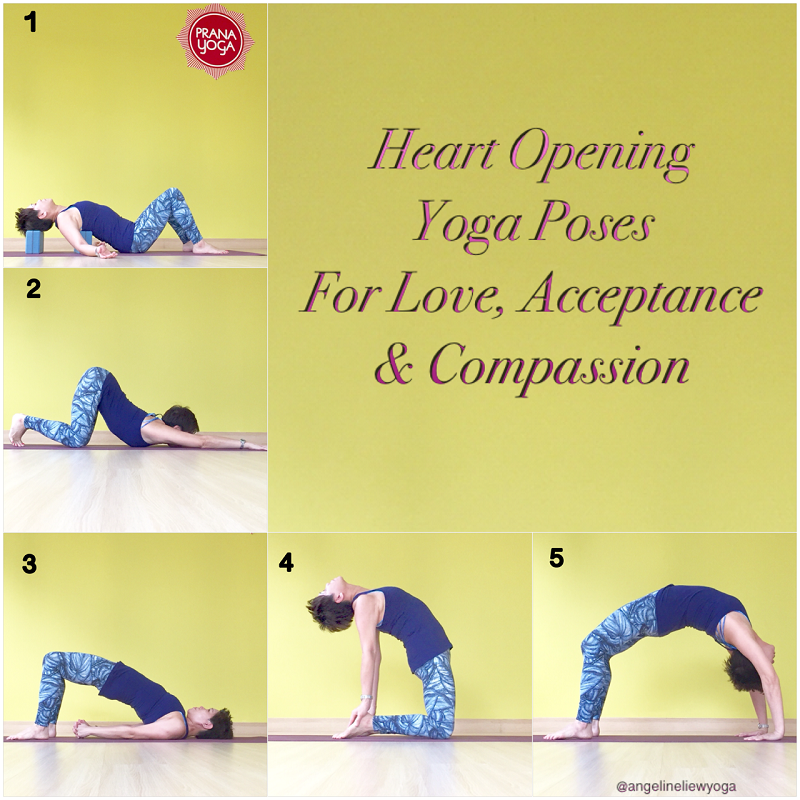
Heart Opening Poses For Cultivating Love, Acceptance & Compassion

 
PRANAYOGA.png
 

We are constantly reminded of love, especially in the month of February, thanks to St Valentine’s Day. In the practice of yoga, the centre of the chest is represented by the Heart Chakra (or ‘Anahata’, in Sanskrit). Chakras mean “wheel”, and being the fourth of seven Chakras that sit along the energetic pathway of the spinal column (Sushumna), Anahata is represented by loving vibrations, kindness, self acceptance, empathy and compassion, when energy is flowing freely.

Backbending asanas, be it restorative or dynamic, are often called “Heart Opening” Poses as they create a sense of liberation…physically, mentally and emotionally. Approach them with an open mind, and witness the ebb and flow of physical sensations and emotions that arise. Practise safely, and warm up well with a few rounds of Surya Namaskar (Sun Salutations) and standing asanas. Use props where necessary, and always consult a yoga teacher if you are new to the practice, have a medical condition or are pregnant.

START by rolling out your yoga mat, sit in a comfortable position and be still for a moment. Witness your breathing, and let your focus drop beneath the neurotic chatter of the busy mind, and into the cave of your heart. Set the intention for your practice (for example), “By accepting and loving myself, I am compassionate to others”.

  1. Restorative Chest Opener (with blocks) : place one block beneath the shoulder blades and one to support the head. This restorative pose gives a lovely myofascial release of the thoracic area whilst keeping the neck free from strain. A great relief after a long busy day at the office or with the kids. Soften into the space, and release your weight onto the block. Stay for 12 long, deep breaths, or even a few minutes if you can spare the time.

  2. Anahatasana (Heart Chakra Pose or Puppy Pose) : From an all-fours position, place your chin on the mat and extend your arms forward. Sink your chest onto the mat whilst keeping the breath smooth. Option to place your forehead on the mat if this variation is too intense for your neck.

  3. Setu Bandhasana (Supported Bridge Pose) : Lie on your back, bend your knees, and place your feet hip width apart. On an inhale, lift your hips up, and interlace your fingers, stretching your knuckles towards your feet. Keep your thighs parallel, and feel like you are lifting up to bring the chest towards your chin. Stay for 12 deep breaths, and on an exhale, release your hands, and lower back down onto the mat.

  4. Ustrasana (Camel Pose) : Come to a kneeling position with your knees and feet hip width apart. On an inhale, lift the chest up, up and up whilst arching and lengthening the whole spine, and place your hands lightly onto your heels. Tailbone is slightly drawn towards the pubic bone, and only if you are comfortable, drop the head back. Stay for 12 even breaths and enjoy the expansiveness of the front of your body. Option to tuck the toes for a more accessible modification.

  5. Chakrasana (Wheel Pose) : From Setu Bandhasana, place your hands by your ears, with the fingers pointing towards your feet, and elbows parallel to one another. On an inhale, lift up into Chakrasana, with your arms straight. Keep your legs engaged by gently hugging your inner thighs to your midline. Breathe well and on an exhale, bend your arms and legs to lower back onto your mat. 

Come into Balasana (Child’s Pose) as a counter-pose, followed by Savasana for a few minutes.

End your practice with gratitude and love, to yourself and to others.

Namaste.


Angeline Liew is a Yoga Teacher-Trainer and Co-Founder of Prana Yoga KL. To connect with her for yoga tips and inspirations, follow her on Instagram @angelineliewyoga or practise with her at www.pranayogakl.com


The Heart of Summer

 
james-connolly-363041-unsplash.jpg
 

In Chinese medicine, the season of summer signifies expansion, growth, activity and creativity. It is ruled by the Fire element and governed by Heart.

Summer is considered the most Yang time of the year, meaning there is an increase in outdoor activities, our energy moves upward and outward and, the Spirit feels light and joyful. Summer days are about creating joy and laughter with family and friends, soaking in longer daylight to enjoy al fresco dinning or a nice walk in the park after work and, spending a relaxing weekend on the beach or exploring nature. On the contrary, summer can also cause damage and harm. Continuous days of high temperature and sweltering heat can cause heat-strokes and sleepless nights, taking a toll on the body and mind. And the potential of bush fires that threaten wildlife and people living in areas prone to it.

In Chinese medicine, a person’s constitution is governed by both Yin and Yang. Some will tend towards more one or the other or some will have a good balance of both. A person with a Cold constitution (constant cold hands and feet, takes a long time to warm up, dislikes winter), is more Yin in nature. They are the ones that look forward to summer and gravitate towards heat the most, which is Yang in nature. On the other end of the spectrum, a person with a Heat constitution (loves winter, feels the heat instantly, dislikes heat), is more Yang in nature and tends to struggle in summer. They will find the summer heat unpleasant, there will be lack of interest to participate in outdoor activities and have a preference to stay indoor to avoid the heat.

The Heart, the Organ that belongs to the summer season stores the Spirit (Shen). According to Chinese medicine, the Heart is responsible for ‘appropriate behaviour, timely interactions, being respectful, helpful and thoughtful’ (Kaptchuk, T., (2000). The Wed That Has No Weaver, p.88). As the Heart is ruled by the Fire element, it can be easily agitated by heat, generating Heart-Heat resulting in insomnia, anxiety, inappropriate or bizarre behaviour. Joy is the emotion of the Heart. Enjoying summer festivals with abundance of alcohol and food, laughter and gatherings can increase joy to the Heart. However, too much joy can also damage the Heart especially when we overdo it with without having sufficient rest and recovery in between activities. In Chinese medicine, we always advocate moderation and balance to generate a harmony between Yin and Yang, rest and activities and, excitement and calmness in the body and mind.

The warmer months provide us with produce that are vibrant in taste and colour and are cooling in temperature. Eating with the season is important as nature has a way of providing what is essential for the body to function during the season. Lighter meals are appropriate and suitable for the summer season and, prepared and cooked using simple and fresh produce. Food such as meat, eggs, and excesses of nuts, seeds and grains should be reduced in consumption to avoid sluggishness. Bitter, the flavour of summer is recommended to be consumed in small amount to cool the intensity of Fire/Heat in the body and, to nourish and settle the Heart (Spirit) during the warmer months.

Bitter foods:

Bitter - alfalfa, bitter melon, romaine lettuce, rye

Bitter & pungent - citrus peel, radish leaf, spring onion, turnip, white pepper

Bitter & sweet - amaranth, asparagus, celery, lettuce, papaya ,quinoa

Bitter & sour - vinegar

Summer nourishing foods includes:

Grains & seeds - amaranth, rice, quinoa, lotus seed, pearl barley

Beans - mung beans, bean sprouts

Vegetables - cucumber, asparagus, bamboo shoots, bok choy, broccoli, Chinese cabbage, corn, mushrooms, snow peas, spinach, summer squash, watercress, seaweed, romaine lettuce, celery, lettuce, bitter melon, scallion, radish leaf, wax gourd, lotus root

Fruit - apricot, cantaloupe, rock melon, watermelon, strawberries, nectarines, mango, peach, lemon, papaya, tomato

Protein - fish, prawns, crab, mussels, octopus, scallops, pork, chicken, tofu

Species - mint, coriander, dill, anise, basil

Salmon Ceviche Cups

 
salmon cerviche.jpeg
 

A simple Asian inspired salmon ceviche by MG Test Kitchen for those lazy summer days or for canapes/starters on Christmas day. Enjoy!

Serves 4-6 people as a starter.

Ceviche marinade

  • 2 stalks of lemongrass (only the lower bulbous half of the stalk), sliced and chopped finely

  • 2 kaffir lime leaves (available from Asian supermarkets. These leaves may also be frozen for longer storage)

  • Small to medium bag of coriander leaves and stalks

  • Fish sauce to taste

  • Dark brown sugar or palm sugar to taste (palm sugar is available in Asian grocers or in larger supermarkets in a thick liquid format or cylindrical blocks. The latter will need to be grated until you yield the desired amount of sugar)

  • Garlic powder and pepper to taste

  • 1 tbsp sesame oil

  • Juice and finely grated rind of 1 - 2 limes (depending on how juicy the fruit is)

Salmon

  • 800gm fresh salmon 

  • 2 ripe avocados 

  • Small bag of fresh coriander leaves

  • Small bag of fresh mint leaves

  • 2 tablespoons sesame seeds

To serve:

  • 2 baby gem lettuce

  • 20gm short or long grain white rice for the Toasted rice (optional)

  • Fried shallots (available at most supermarkets or Asian supermarkets)

  • Toasted peanuts, fine chopped 

Method:

  1. Separate the baby gem lettuce into individual "cups" and rinse well.  Leave aside to dry

  2. Make the toasted rice (if using) by dry frying the rice over a medium heat (no oil required). Remove the rice from the pan once it is a light brown colour and has a nutty aroma. Transfer the toasted rice to a mortar and pestle and crush until the rice grains look like grains of table salt.

  3. Make the ceviche marinade by crushing the lemongrass, lime leaves, coriander leaves and stalks, and pepper in a mortar and pestle. You may need to divide this into two portions, depending on the size of your mortar and pestle. You may also use a food processor or a blender if you don't own a mortar and pestle, however you will get a much better flavour and aroma if you use a mortar and pestle as it releases the aromatic oils from the lemongrass and kaffir Iime leaves.

  4. Once crushed to a fine paste, add the sesame oil, lime rind and juice. 

  5. Add the garlic powder, dark brown sugar OR palm sugar and fish suace, all to taste (note: fish sauce is very salty so add a little at a time).  The marinade should be a balanced mix of savoury, sweet and sour flavours, and have viscous consistency. Set the marinade aside.

  6. With a sharp knife, gently cut the salmon into 0.5 - 1cm cubes. 

  7. Transfer the raw cubed salmon to a large non-reactive mixing bowl (glass, stainless steel or ceramic) and gently mix in the ceviche marinade. Cover with cling film and leave to marinade in the fridge for 20 - 30 minutes (this is longer than a traditional ceviche would call for, but I find that this is necessary for the fish to take on the flavours of this marinade).

  8. While the fish is marinating, warm a small pan on a medium heat. Once the pan has warmed, toast the sesame seeds gently (no oil required), ensuring to toss the seeds every few minutes. Toast until fragrant and the seeds turn a light golden colour. Do keep an eye on the seeds as different stove tops will have varying heat. Sesame seeds can burn easily and taste acrid.

  9. Clean and remove the remaining coriander leaves from the stalks. Chop finely and set aside. Reserve a small bowl to garnish the dish.

  10. Repeat step 9 with the mint. 

  11. Separate the avocado flesh from the skin and remove the stone. Gently cut the avocado into 0.5-1cm cubes (same size as the salmon).

  12. Gently mix the toasted sesame seeds, chopped coriander, mint and avocado into the bowl of marinated salmon ceviche. Careful not to crush the avocado or salmon whilst mixing. Cover the bowl with cling film and store in the fridge if not serving immediately (it is preferably to serve this within the hour).

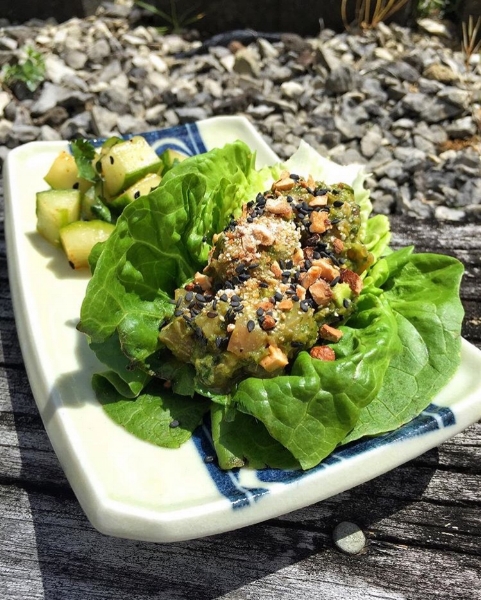
  13. Arrange the baby gem lettuce cups on a large serving plate or on individual serving plates if serving a la carte. Spoon enough salmon ceviche into each lettuce cup and garnish with chopped mint, coriander, toasted rice (if using), fried shallots and finely chopped toasted peanuts.

Autumn series: About Grief and Letting Go & A Sweet Recipe

 
jerome-prax-60091-unsplash.jpg

As the cool crisp air of autumn mornings and warm afternoons begin to be apparent, we will start to shift our diet, and prepare our body and mental state to help us transition into cooler temperature and shorter daylight days.  Adjusting to the ebb and flow of the changing season can be challenging to some as the body and mind find it difficult to cope, or a pleasant welcome for others. 

Autumn in Chinese medicine belongs to the organ of Lungs and Large Intestines.  The Lungs govern our respiratory function and circulate our ‘Wei Qi’ also known as immunity or defence Qi around the body.  Wei Qi helps our body to adjust and protect us from the changes in the external environment.  Those with poor or compromised immune function might be prone to getting cold and flu like symptoms, dry throat and skin, and excessive mucous production and congestion.  Other may start to see an increase in digestive problems especially with bowel movements leaning towards constipation and dry stools. 

The emotion associated with the Lungs is sadness and grief.  We may start to feel a sense of low moods and noticeable mild depression.  The paired organ of the Lung, the Large Intestines, function as an organ of elimination.  This may be a good time to release and let go of emotions, career or baggage that we hold on to that no longer serve our highest good.

As nature slowly contracts and moves inward and downwards, we will begin to introduce warm and pungent spices such as horse radish, cardamom, chili, white pepper and coriander into our diet.  We will also see more white coloured food available such as the onion, garlic, cabbage, leek, radish, daikon turnip, fresh ginger, apple and pear.  These warming and pungent spices, and white coloured food are a great way to boost the function of the Lungs, aid in circulating Wei qi around the body and disperse and eliminate the stuck energy of the organ.  Another way to help strengthen your Lung Qi is to practise deep breathing exercises daily for 5 minutes.  It is also a great way to help reduce stress which can easily compromise our Lung Qi/immune function.

Try this simple autumn recipe by Gloria Chan @mgtestkitchen incorporating seasonal produce to help boost your Lung Qi – Enjoy!


Workshop - Gua Sha: An Introduction to Self Healing

Gau Sha is one of my favourite 'go to' ancillary tool to reduce and ease muscular pain, stiffness and tension, plus for many other ailments such as cold and flu, chills and fever, bronchitis, and a fantastic therapeutic method for facial rejuvenation treatments.

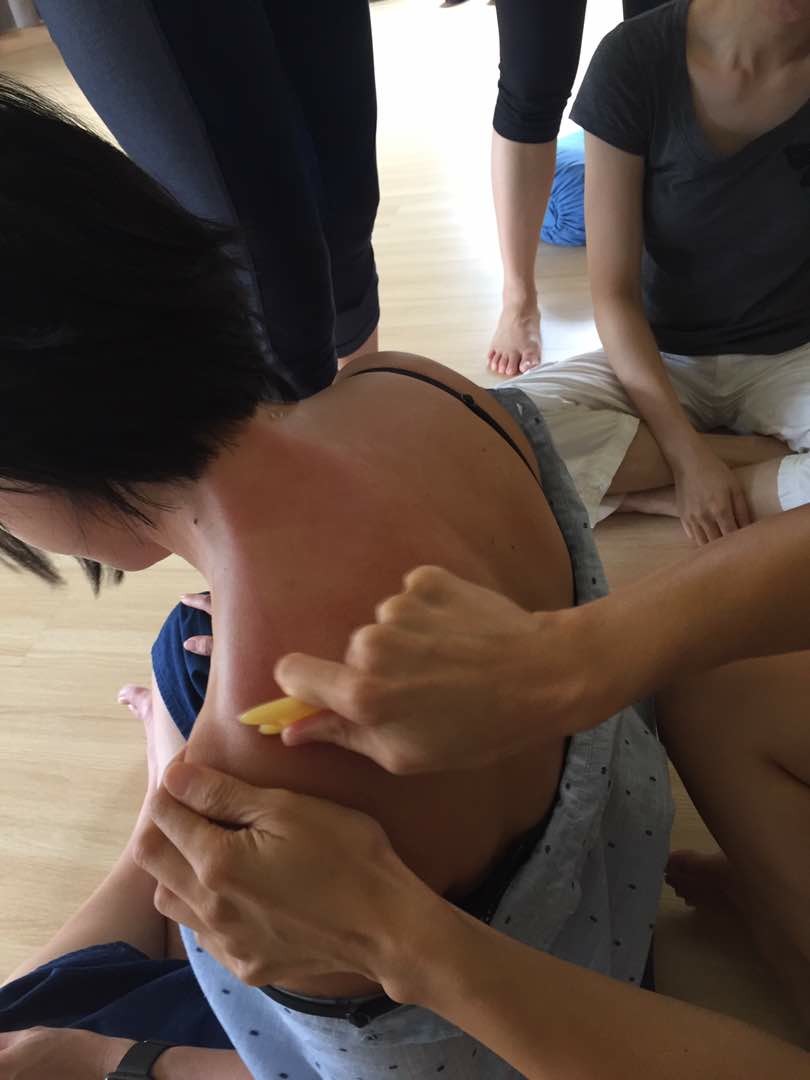
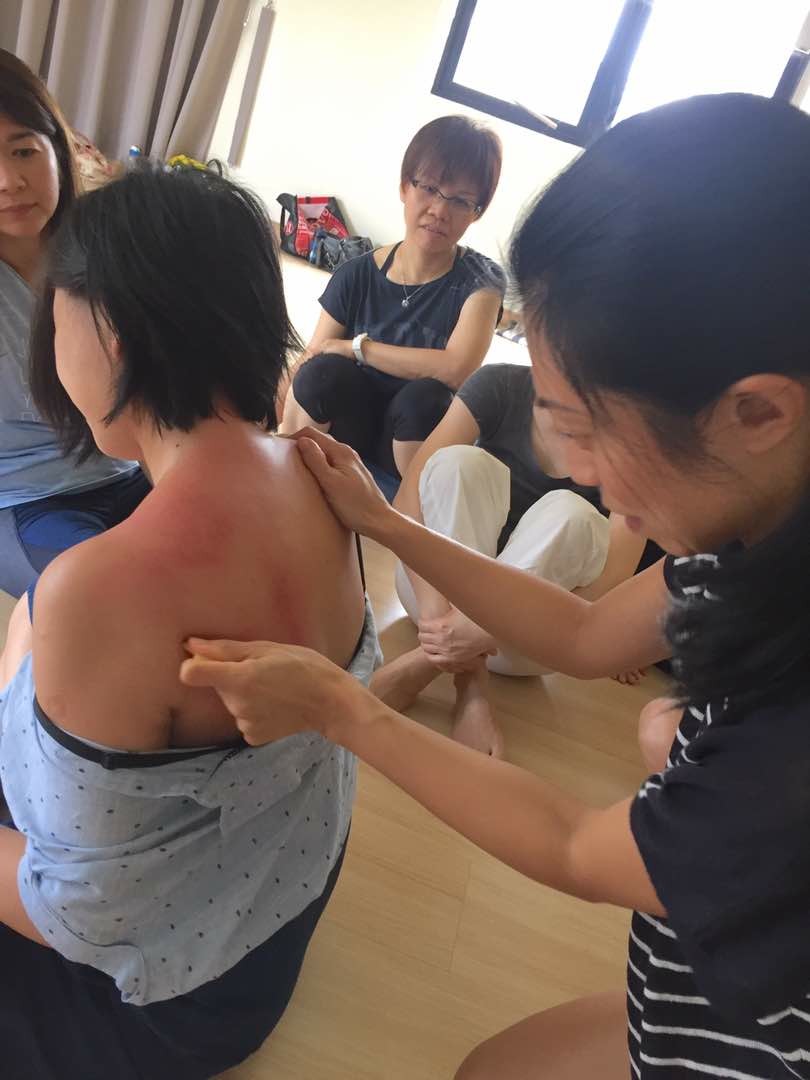
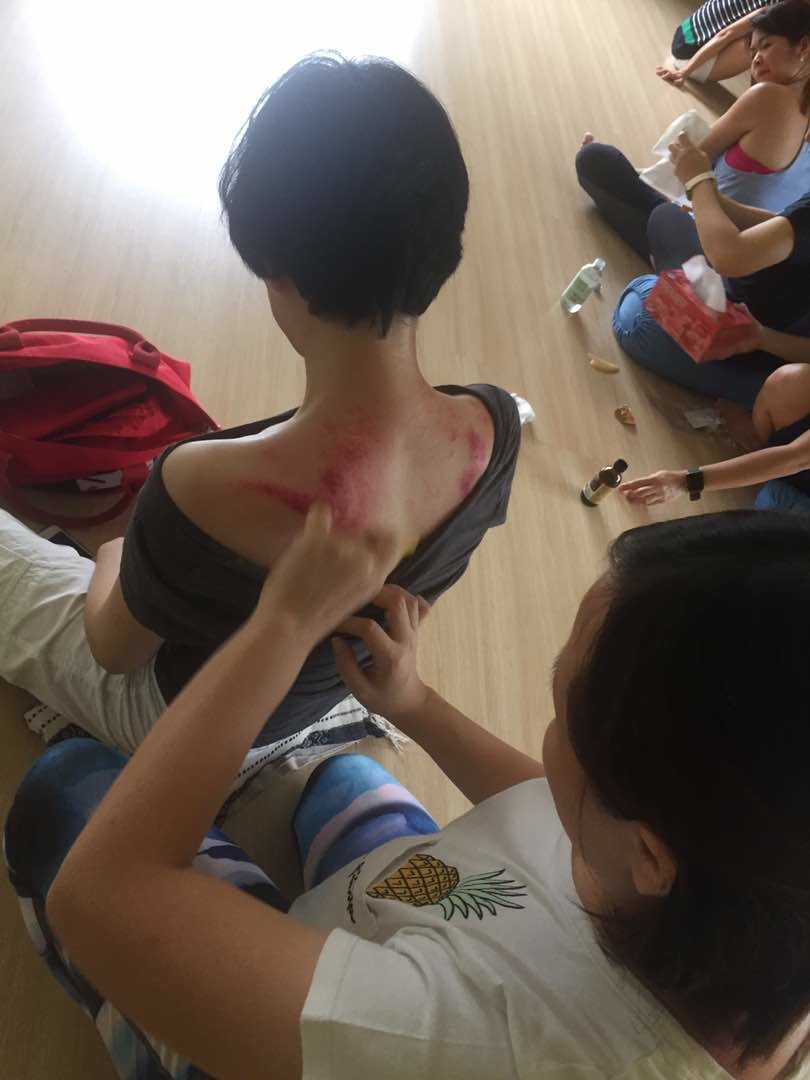
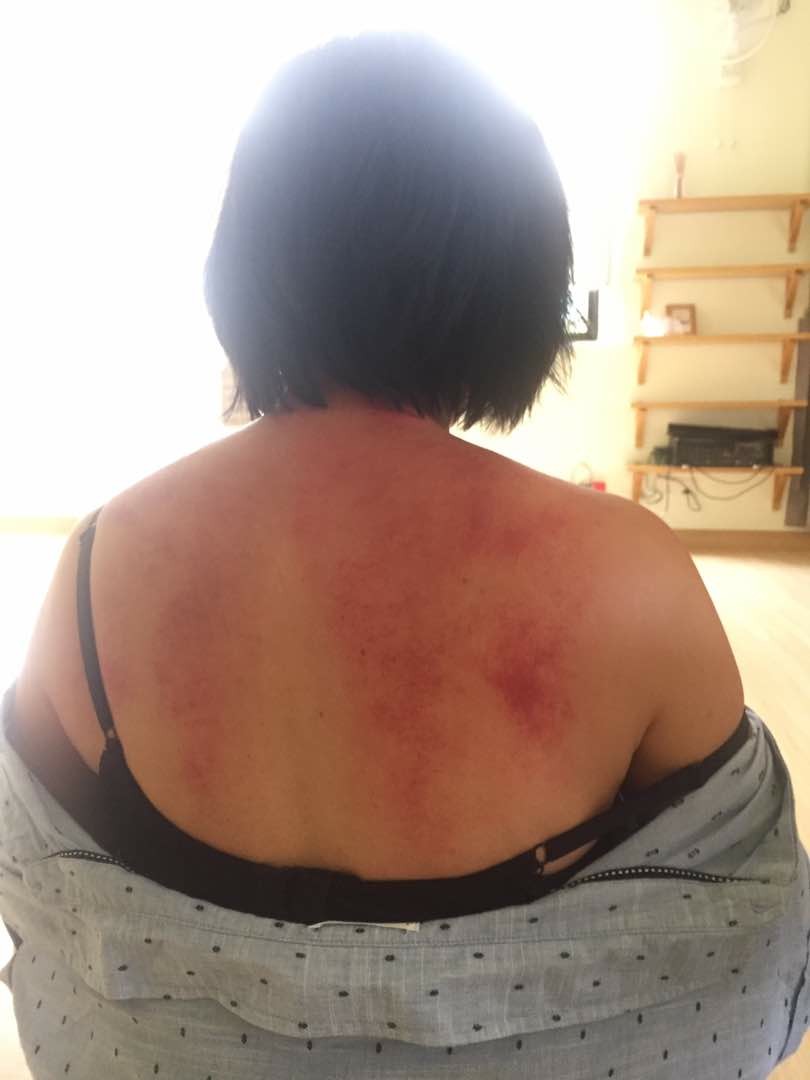
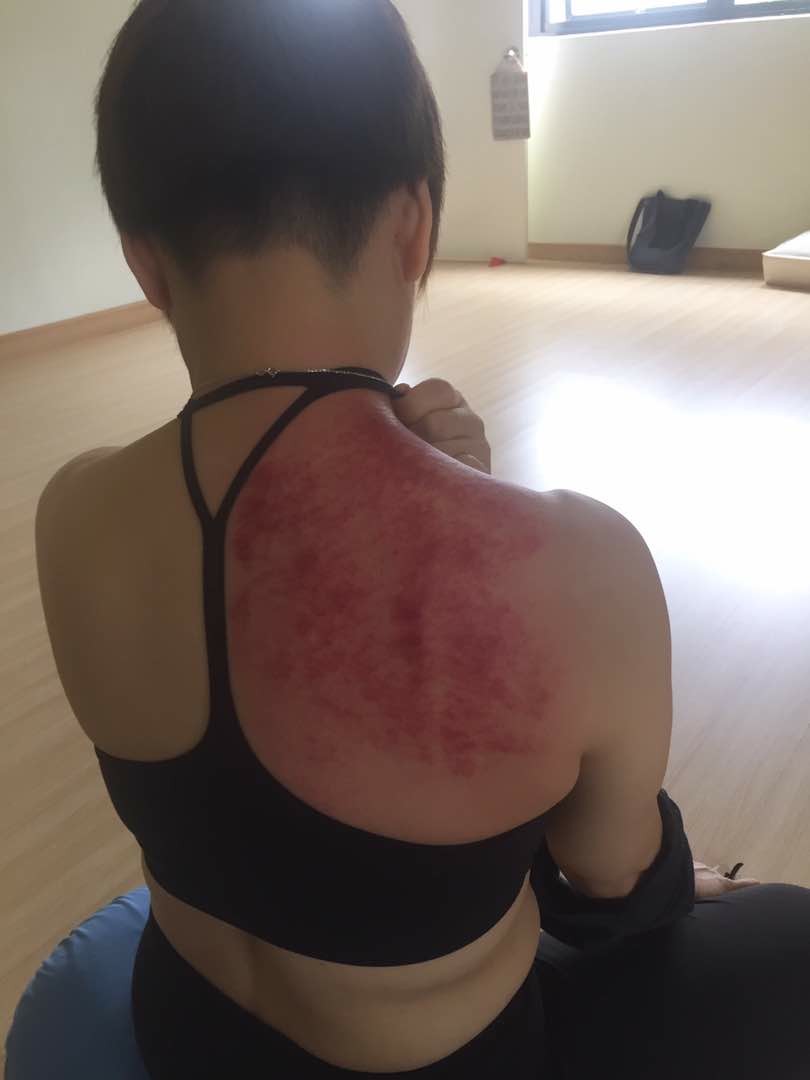
Gua sha, also known as “spooning” or “scrapping” is a common therapeutic treatment used in Chinese tradition and Chinese medicine practice.  Gua means to rub or to scrape and Sha is a distinctive name given to a type of red dots or sand like redness that appears on the skin surface during and after treatment.  These sand like redness are toxins and stagnation that lie deep within the muscle layers that are brought up to the surface to be eliminated.  This encourage fresh blood flow to the site of blockage by nourishing and enhance healing to the body.  This method of treatment is effective and brings immediate and lasting benefits to ones overall health.

My lovely friend, Angeline from Prana Yoga Kuala Lumpur suggested that I run a workshop on gua sha during my visit to Malaysia.  She is a convert after I gave her some gua sha a couple of years ago to treat her chronic stiff neck and shoulders.  She felt immediate release and subsequently, with further treatments the stiffness was completely resolved.

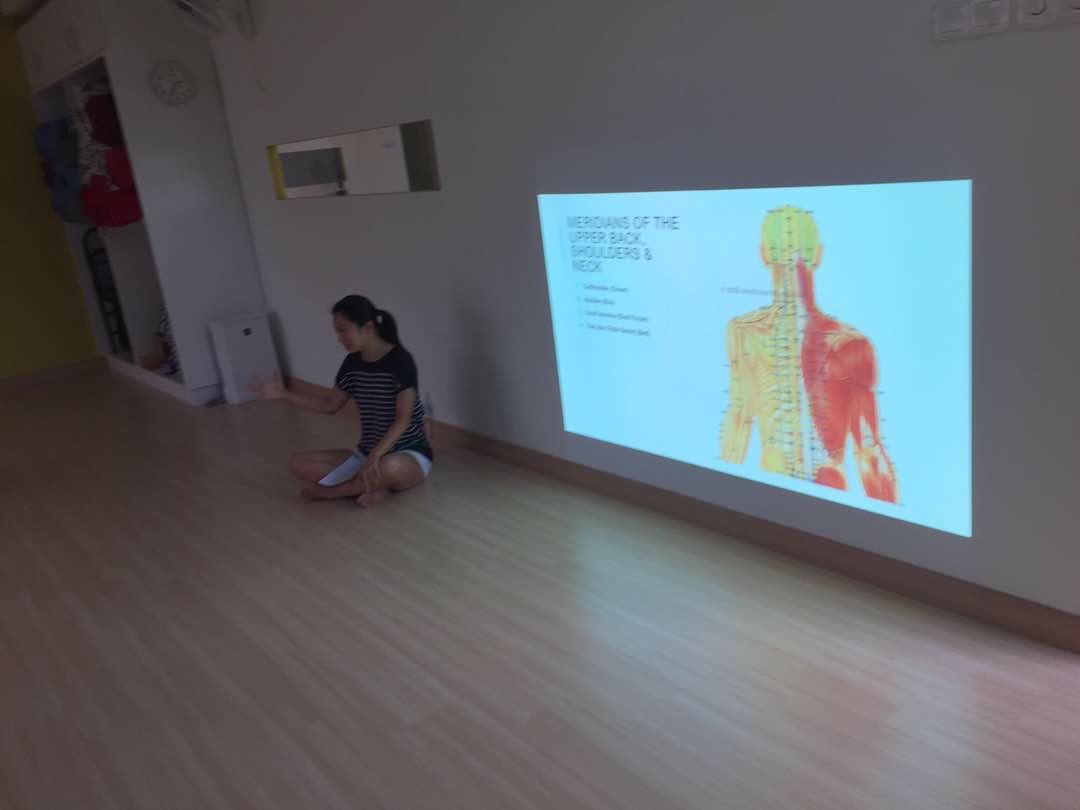
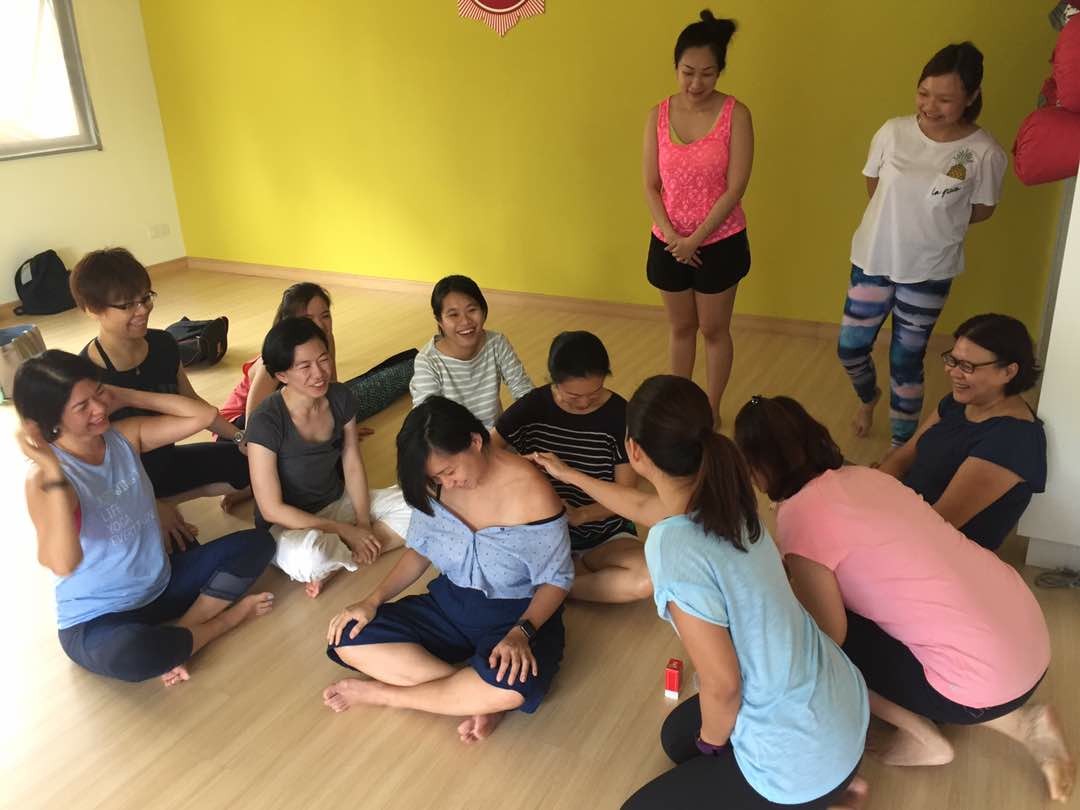
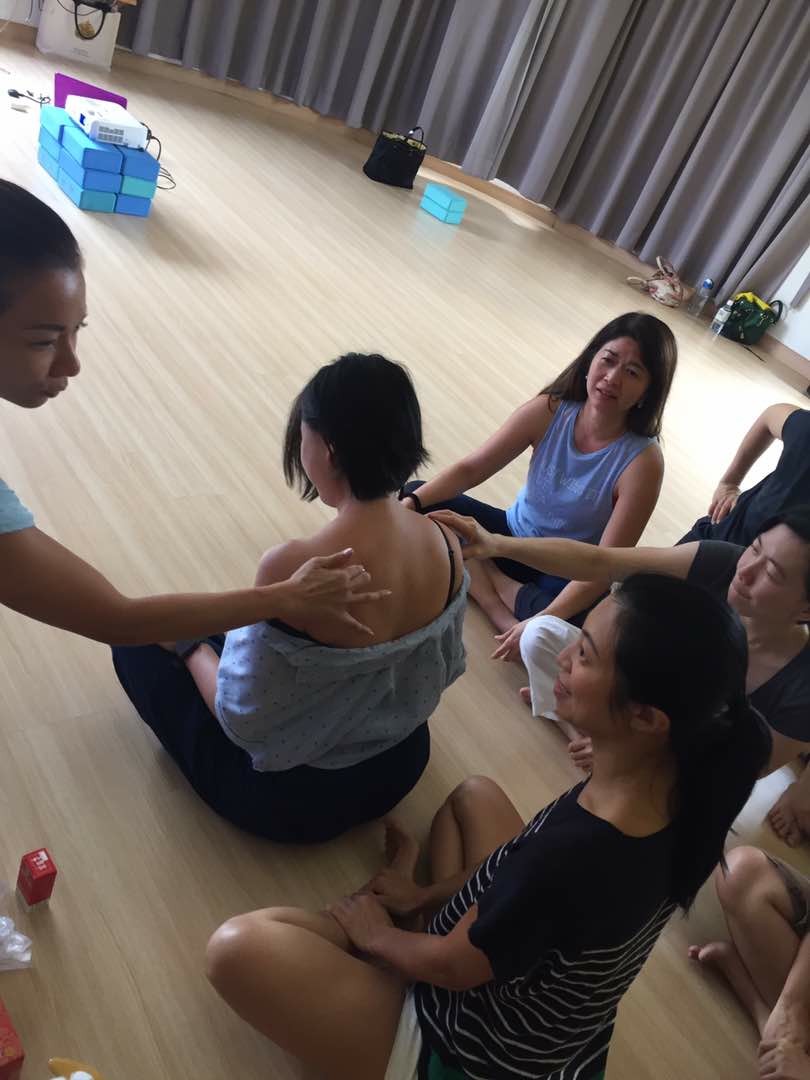
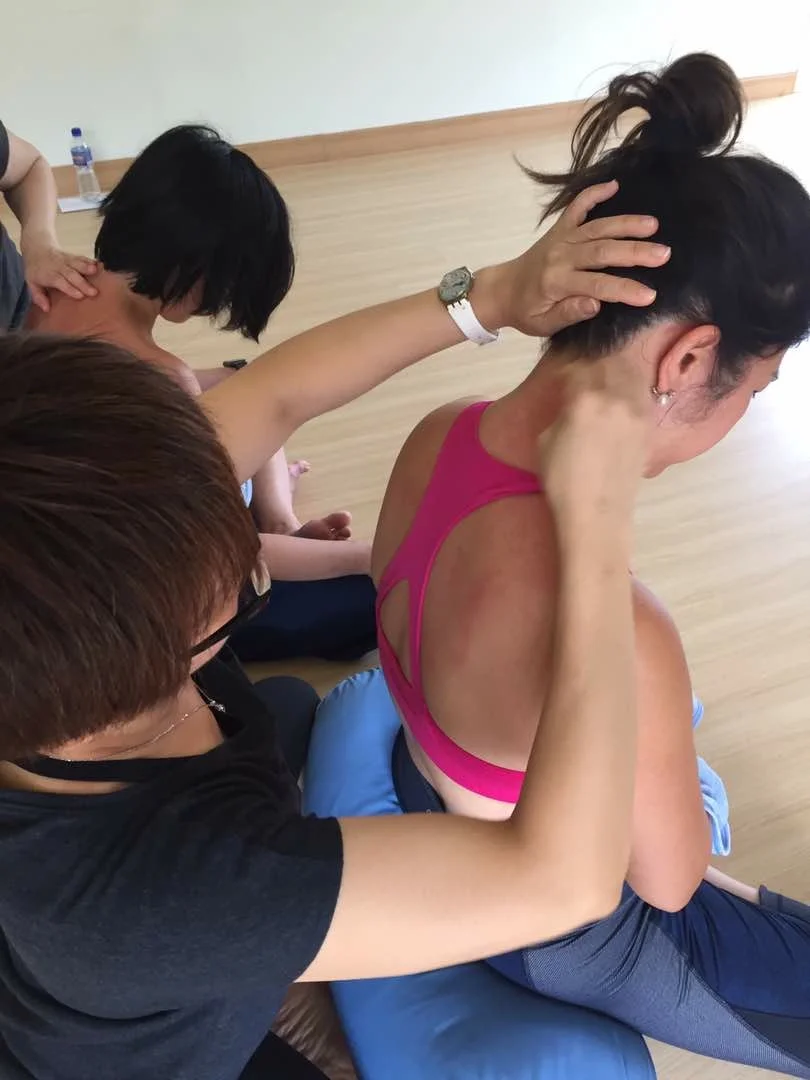
The workshop was held in Prana Yoga on an overcast and humid Saturday afternoon.  The naturally lit and light wood flooring yoga space was a welcoming reprieve from the weather, and the perfect place to have the workshop.  The attendees that signed up were in good spirit and enjoyed each other company while giving gua sha to each other.  We started the workshop by going through the meridians that transverse on the neck, shoulders and upper back, and the primary and secondary signs and symptoms that is caused by the imbalance of these meridians.  We also briefly talked about other benefits of gua sha other than for the treatment of musculoskeletal symptoms before the hands on demonstration and gua sha techniques were introduced.  Below are some photos of the workshop and the results of the gua sha.  The redness on the body may look painful and 'hideous' but the therapeutic effects of releasing stagnation and stiffness of the neck, shoulders and upper back were felt immediately, and enjoyed by everyone that attended.

Here is a short video on the demonstration of doing gua sha

Wellness Series - Floor Series for the Tech Neck

 
Tech neck

We have collaborated with a registered yoga teacher, Angeline Liew from Prana Yoga Kuala Lumpur to give you some useful tips in this Wellness series called the "Tech Neck".

Do you spend hours in a fixed position, slouched in front of a computer, spine rounded, neck sticking out like a turtle craned towards your screen, wrists and jaw tensed without you even realizing it?  Do you complain of constant stiffness in the neck and upper back? I often find that these are the main culprits for clients that come in to the clinic for neck and shoulder tension and pain which can lead to temporal and/or occipital headaches.  In Chinese medicine perspective, aches, pain and tension is related to Qi and Blood Stagnation in  meridians.  In thes case of the "Tech Neck" meridians that are affected are the Bladder, Gallbladder, Large Intestine and Small Intestine channels.   Qi and Blood stagnation can also be exacerbated by stress, lack of exercise, and a sedentary lifestyle.

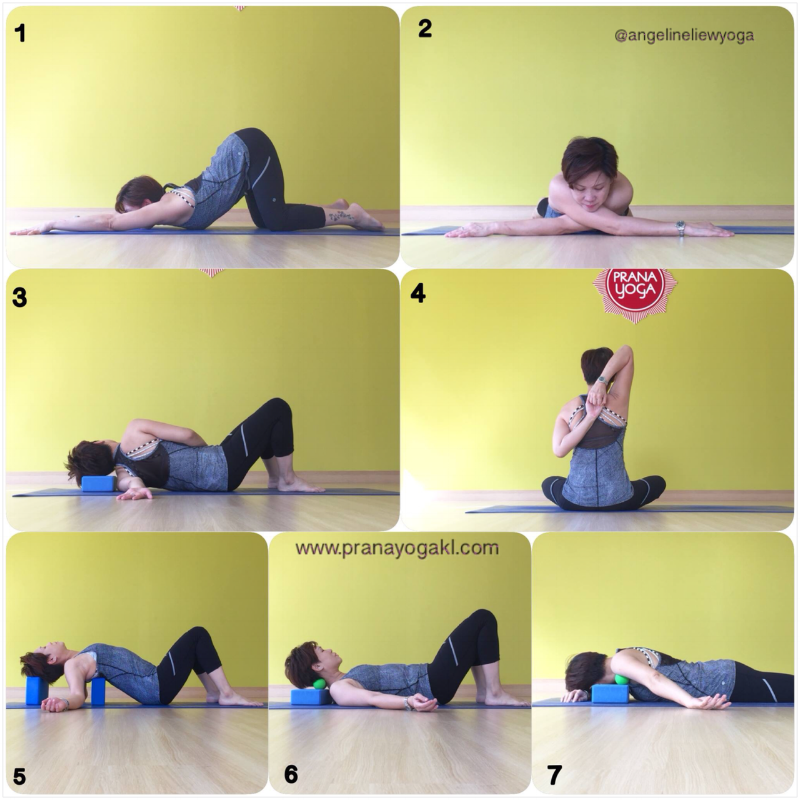
Here are a few simple yet effective yoga sequence designed by Angeline to ease tension in the neck and shoulders, and relief compression in the front body, whilst stretching out those tight knots, to enable more range of motion, and hopefully help to minimise the occurrence of headaches.  She highly recommend doing the Tech Neck series at least once a day.

tech neck.png
  1. Extended Puppy Pose - a delicious and deep chest & upper back opener. Modify by placing your forehead on the floor, instead of the chin, and let gravity assist your chest to sink to the floor.
  2. Shoelace Pose for the Arms - stretches the deep muscles between the shoulder blades (#rhomboids), posterior and lateral deltoids and upper arms.
  3. Intense Shoulder Stretch - one of my fave stretches to target the front muscles of the upper arms. By squaring the hips, you'll also get a nice upper back twist. Do support your head so that you don't end up straining the neck.
  4. Gomukhasana (Cow Pose arms) - works on increasing range of motion in the shoulders, as the top arm is externally rotated, and the bottom arm is internally rotated. Remember to switch sides, and use a towel or strap if you can't bind.
  5. Supported Chest Opener - one word : "Yummy"! Seriously, I can fall asleep in this pose, as it helps to deepen and regulate the breathing too. Block is placed at the bottom tips of your shoulderblade .
  6. Trigger Point Therapy for the Neck : Very gently turn the neck side to side, to self-massage the tightness in the neck.
  7. Trigger Point Therapy for the Arms : tension in the neck travels down the arms too, causing limited mobility. Here, I use lacrosse balls, but you can use tennis balls too. Target the front of the shoulders and #pectoral muscles (avoid the collar bones), and slowly move down the upper arm.

Remember to relax, and breathe deeply to allow your body to receive maximum benefit from the practice. (*Avoid lying on your belly if you're pregnant, and consult your teacher for alternatives), and if symptoms persist please seek professional help to remedy your condition. 


Spring Series - 5 Tips To Survive Hay Fever This Spring

 
hay fever

We are well and truly into hay fever season as I see more patients coming into the clinic for this reason.  Besides treating hay fever with acupuncture and Chinese herbal medicine, I often advise my clients to do some additional work to further help them manage their hay fever symptoms.


1) Nasal wash.  This is one of the best way to clear nasal congestion.  It cleans your sinus cavities from excess mucous and pollen or inflammatory materials it may contain.  I highly recommend Flo Sinus care as I use this product myself and have found it to be very effective (I am not paid to do any advertising for them).  I wash my sinus cavities at least 2-3 times a day.  I have made it a habit of washing my sinuses every time I have spend time outdoors.  You can find this product in any Chemist Warehouse near you.  Here is a Youtube Video explaining the importance of caring for your sinuses and how the product is used.

2) Removing clothing items and showering when exposed to pollen.  After spending a glorious spring day out removing any item of clothing exposed to pollen and jump straight into the shower to wash away pollen stuck to the hair and eyes helps to ensure that the pollen does not irritate the nose and eyes when I am at home safe from allergen.

3) Invest in an air purifier.  As the weather warms up, I love opening the windows to let in the fresh air flow through the house.  However,  to combat pollen flowing around the house, I use an air purifier to clear the air of allergen after I have shut the windows. It is also very important to continuously keep your space clean and dust free to reduce any trigger to your allergy.

4) Avoid foods that produces mucous.  Dairy, sugar, raw and greasy food should be avoided.  In Chinese medicine, foods that deplete the transformation and transportation process of the Spleen will often lead to the formation of Damp (sinus congestion, mucous and phlegm).  If you are prone to being Damp these food should be avoided to reduce mucous build up in the body and sinus cavities. Foods to avoid are banana, avocado, chocolate, ice-cream, yoghurt, cheese and cold and raw salads and smoothies.

5) Wear a mask and sunglasses.  Wearing a mask may not be fashionable and may get some people staring at you.  However, if you have bad hay fever symptoms and hate being stuck indoor on a wonderful spring day, wearing a mask and sunglass is an alternative to reducing the severity of symptoms while enjoying the outdoor.  Do be cautious that on high pollen count days, it is advisable to stay indoor.


I hope you have found these tips useful.  There is a link to pollen count in Australia and some interesting articles about hay fever that you may be interested in the resources section below.  If you have further questions on how acupuncture and Chinese medicine can help to reduce the severity of your hay fever symptoms, we have a FREE 15 minutes consult at the clinic.  Simply BOOK ONLINE and we will be happy to have a chat.  In the meantime, implement these suggested strategies that can help you minimise your allergic reaction to enjoy spring a little more this year.  From a hay fever sufferer to another - good luck!

Resources

Pollen Forecast in Australia

Australasian Society of Clinical Immunology And Allergy, 2015.  Pollen Allergy.

Ryan, C., 2015.  Don't Blame The Wattle:  Allergy Expert Explains Real Causes of Hayfever And Why Spring Isn't Always The Worst Time For Sufferers.

My Hayfever (n.d.).  Hay Fever In Australia


Winter Series - The Secret To Managing Hay Fever In Spring

 
hay fever

PREVENTION! That is the secret to managing bad hay fever symptoms in spring.

Spring is not my favourite season of the year because I get severe hay fever symptoms such as constant nose drip during the day and at sleep, non-stop sneezing, watery and itchy eyes and etc.  It feels like you are having a common cold continuously for 3 months, and all you want to do is to cut your nose off or live in a bubble until spring is over.  I have tried all sort of western medication such as Zyrtec, Claratyne and nasal spray - none of them had worked for me.  What did work in helping my body to manage and prevent severe hay fever attacks is Chinese herbal medicine and nasal wash.

What I found when I took herbal medicine to boost my immunity and defence system in Winter season, my body was more able to cope with hay fever in spring.  Last year I had one of the best year from my severe hay fever symptoms.  There was the occasional attacks but that would only last for a day and most of the days and during the night, my nose was drip free, itchy and watery eyes free and sneeze free.

So, here is my one simple tip in preparing your body to combat hay fever in spring -


PREVENTION - acupuncture and Chinese herbal medicine is by far the best.  It is natural and it works!  If you are afraid of needles, there is herbal medicine that you can take to help boost your immunity and defence function to help your body cope with hay fever season.  Preparing your body NOW is the best solution to reducing the severity of your symptoms in spring.


If you dread spring time because of hay fever and are tired of western medication that does not work for you, there is a solution.  From my own experience, acupuncture and Chinese herbal medicine can reduce the severity of hay fever symptoms.  However, there is a catch - natural medicine takes time to work.  Therefore, the sooner you start your treatment, the better you will be able to face hay fever nose on this coming spring.  Do not hesitate to make an appointment for a consultation with us - we are more than happy to have a chat with you and your concerns.


Winter Series - 5 Tips to Help You Cope With Winter Blues

 
Eastential Acupuncture Melbourne

Feeling a little low mood, lack of motivation and sad during winter months?  You may have winter blues also know as Seasonal Affective Disorder (SAD).  Western medicine define SAD as a mood disorder experienced by people with normal mental health throughout the year whom experience depression at the same time each year, especially in winter.  In Chinese medicine, depression is a sign of disharmony or imbalance of Qi.  Qi is an energetic flow that circulates within the body and connects each Organs together to nourish and harmonise the body, mind and soul.  I often find in clinical practice that lifestyle, diet and emotions are a common contribution towards depression.  Overworking, frustration, irritability, anger, unexpressed feelings, overthinking, fear and over-consumption of raw and cold foods are some of the sign and symptoms that inhibits the smooth flow of Qi and Blood, thus leading to depression.  The combination of acupuncture, Chinese herbal medicines and simple lifestyle and diet changes are a great way to help lift those low moods.  Here are 5 tips that I advise my clients to help them manage their depression.


1) Exercise - 30 minutes walks daily.  A study have found that brisk walking for 35 minutes a day, 5x a week or 60 minutes a day, 3x a week had a significant impact on mild to moderate depression symptoms.  Experts have shown that by exercising it enhances the action of endorphin and stimulates the neurotransmitter nor-epinephrine.  Endorphin and nor-epinephrine are what I call 'naturally producing happy substance' that help lift and improve our mood.  In addition, regular exercise offers other health benefits such as lowering blood pressure and boost self-esteem.  So put on your walking shoes and start walking those winter blues away.

2) Sunshine - get more of it.  When the sun is out, take every opportunity to get out especially when you work in an office.  Even for just 10-15 minutes in the sun will lift you mood.  If you are lucky enough to have a window in your office, sit close to it to get an extra dose of sunshine.  If you are working from home, open up your blinds and curtains to let the sun rays in and also take short breaks to enjoy the sun.

3) Bundle up, go out and explore.  The worse thing about winter is being stuck indoor.  Granted that there will be days when it is absolutely yucky out there, and all you want to do is be indoor, read a good book and rug up by the heater.  However, for the other days, encourage yourself to go out, explore your neighborhood, or even make a trip to the ski slopes and enjoy what nature has to offer.  One of my favourite place to visit is Lake Mountain, not far from Melbourne to do some cross country skiing.  There is something quite spectacular and magical about a winter landscape.

4) Crank up the tunes.  Evidence are emerging that by listening to upbeat music can help lift and boost up low moods.  Fill your space and ears with music that makes you want to sing and dance, even if you look goofy doing it.

5) Diet - nutritious, well balanced, cooked warm meals.  In Chinese medicine, we always advocate that 'food is medicine'.  A well balanced diet consisting of protein, vegetables, fruit and grains should be the first port of call towards the health of a person.  I often advise my clients to eat warm cooked food and to minimise the amount of salad, cold and raw food in their diet.  As the weather is cold, the body naturally desire warmer food such as slow cooked stews, bone broths, roasted vegetables and soups.  In additions, adding warming spices such as ginger, cinnamon, cloves, turmeric and black pepper in cooking help enhance the warming properties of the food.  These warming foods are a great way to nourish Qi and Blood.  When Qi and Blood is healthy and well looked after, it will help manage and minimise those winter blues.


I hope these tips are useful however, if you still cannot shake those low moods away, please seek professional help.  Acupuncture and Chinese medicine are effective and natural alternatives in treating depression.  We are happy to chat with any concerns you may have.  Please contact us at Eastential Acupuncture & Chinese Medicine Melbourne

Resources

Harvard Health Publications, 2009.  "Exercise and Depression"

Blaszczak, J., 2015.  "10 Things You Didn't Know About Seasonal Affective Disorder"

Lake Mountain Alpine Resort

Wall, T., 2013.  "Trying To Be Happier Works When Listening To Upbeat Music, According To MU Research"

Rodriguez, T., 2014.  "Can Acupuncture Treat Depression?"

Ljubinovic, N.  "Acupuncture, Anxiety & Depression"


Winter Series - 7 tips to help you manage Dry skin in winter


The first thing that you will notice in winter is dry skin.  As we enter into colder and windier months, our skin begins to feel dry, cracked, flaky and itchy.  To help your skin cope during these colder months, here are 7 tips that had helped my skin cope better in winter.


1) HYDRATE -  one of the best way to combat dry skin.  By hydration I mean drinking plain water, preferably warm to room temperature plain water.  Aim to drink at least 1-2 litres (6-8 glasses) on a daily basis.  I find filling a water bottle which is in clear sight  from where I work is a great reminder to keep up with my fluids.  Also aim to reduce intake of caffeine (coffee, tea), sugary drinks (fruit juice, energy drinks) and alcohol as these often lead to dry skin, and is a leading cause of wrinkles.

2) MOISTURISER - natural ones are the best.  In winter, I swtich from a light weight moisturiser that I use in summer to a more heavier and hydrating moisturiser to prevent my skin from drying out.  This makes sense as the temperature and weather changes, so does our skin care products and regime.  Aim for moisturisers that have nourishing properties such as sweet almond oil or apricot kernel oil which are especially good for dry skin.  It also helps to improve your complexion giving you that 'youthful glow' and keeps wrinkles at bay.  Three to four drops of either of these oils added to regular moisturiser for people with oily skin is often sufficient for colder months.  For those with dry or mature skin like myself, the best is to invest in a heavier and hydrating moisturiser that contain ingredients such as shea butter, jojoba oil and avocado oil.  I will also add a few drops of either sweet almont oil or apricot kernel oil to the moisturiser to give my skin a further boost of hydration.  Avoid cleanser that has alcohol labeled on it.  This will strip your skin of your natural oil and will make your skin feel dryer and potentially make it itchy.

3) SCRUB - a great way to shed off dead skin for the face and body.  Scrubbing is a great way to stimulate and circulate Qi and Blood to the face and body while getting rid of dead skin.  It is important to do this often to encourage skin regeneration.  I use a mild scrub for my face once a week and a loofah scrub for my body at least once every two weeks.  I find my skin feels amazingly soft and subtle, and is able to absorb the goodness from my moisturiser better.  Scrubbing is also a great way to encourage lymphatic drainage.  CAUTION! If you have skin problems such as eczema, psoriasis and any other skin problems, please seek advise from your health care practitioner before using this technique.

4) MASQUE - adds additional hydration to your skin I tend to use facial masque sheet more often in winter than I do in any other season to add more hydration to my dry skin.  I use a signature Chinese herbal masque powder which I use on my clients in my clinic, that helps with nourishing and hydrating the skin.  It is a great way to use the 10 minutes while the facial masque sheet is applied to meditate and calm your senses, in return it will help to combat signs of aging from the stresses of daily life.

5) EXERCISE - great for skin health When you exercise, you stimulate and circulate Qi and Blood around your body and to the surface of the skin.  Good Qi and Blood is vital to keep your skin soft, moisturise and hydrated.  In addition, exercise is good at eliminating unwanted toxins from your skin when you sweat.  Bare in mind that what you sweat out, you will also need to replenish it back in with fluids such as water or coconut water.  In addition, exercise is a great way to reduce stress which is one of the most common cause of aging and wrinkles.  I would recommend a 30 minute to an hour of daily exercise such as brisk walk, yoga, dancing etc to get some benefits out of it.  Added bonus -  for those that have cold hands and feet like I do, daily brisk walking for 40 minutes to circulate Qi and Blood has been the best remedy so far.

6) HOT SHOWERS - reduce it!  As much as hot showers or baths are very enticing during colder months, they are actually bad for your skin.  The longer you are in a shower or bath, the more if will strip away the natural oil from your skin.  Aim for shorter showers, avoid hot baths as much as you can and if possible, recuce the temperature of the hot water used.  Once you jump out of the shower, dry your skin by gently wiping you face and body with a cotton towel, then lather on your nourishing oils and moisturiser soon after.  This will ensure that you skin will absorb all the nourishing goodness from your moisturiser which will keep it soft and moist.

7) DIET - nourish dry skin from inside out.  I often tell my clients that comes in for Facial Rejuvenation Acupuncture that the skin is the biggest organ in our body.  What we eat if often a good indicator of how our skin is performing.  To help with dry skin, aim for foods that are high in omega-3 and omega-6 essential fatty acids.  This will help to keep the skin cells strong, maintain elasticity and help keep the skin moisturise.  Foods that contains these nutrients are avocado, oily fish such as sardines, flaxseeds and walnuts.


I hope these tips would be helpful for your skin survival during winter. 

We are offering a special "Winter Facial Rejuvenation Acupuncture Package" for a limited time from June until end of July2016 to help your skin survive winter.  To find out more about this package, please refer to our "Fees and Book Online" page.

Resources

Whitney, L. 2014.  "Health Benefits of Scrubbing With A Loofah"

Cho, C. 2015.  "Saving Face: The Beauty of Sheet Masking"

Guthrie, C. 2010.  "8 Ways Exercise Makes You Gorgeous"

Parson, J. 2015.  "Hot Showers Harmful To Skin During Winter"

Wu, S. 2014.  "Eating For Beauty: The Best Diet For Healthy, Clear Skin"

Angelo, G. 2012.  "Essential Fatty Acids."